American Staffordshire Terrier: Temperament, Housing & Care
Learn about American Staffordshire Terrier temperament, dog selectivity, housing restrictions, exercise needs, and how to evaluate any AmStaff.
Updated
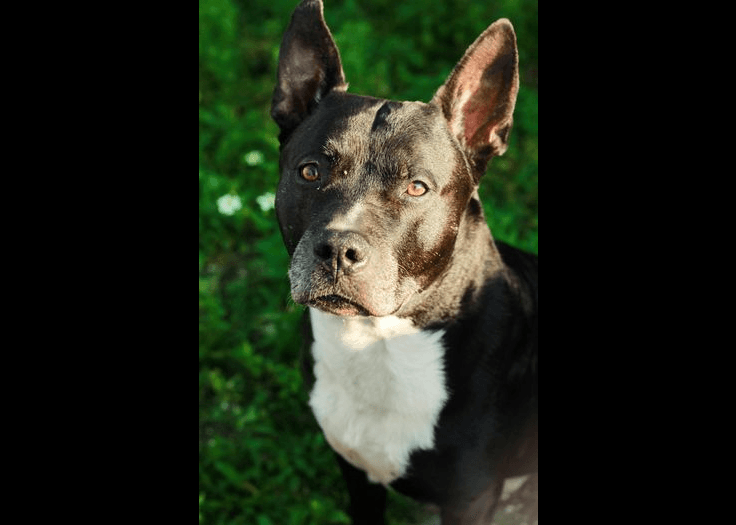
Stats at a Glance
- Size
- Medium
- Energy
- High
- Shedding
- Low
- Trainability
- High
- Apartment
- Possible (daily exercise required)i
- BSL and insurance risk
- Grooming
- Lowi
- Barking
- Moderate
- Exercise
- 60–90 min
- With Kids
- Yes (with supervision)i
- supervision; physical exuberance
- With Dogs
- Possible with managementi
- Individual assessment essential
- With Cats
- Possible with managementi
- Prey drive varies; intro carefully
- Origin
- United States
Trait Score Snapshot
The American Staffordshire Terrier is a medium-sized, athletic, people-oriented breed recognized by the American Kennel Club (AKC). It shares common ancestry with the American Pit Bull Terrier (UKC-recognized) and is frequently lumped together with it under the "pit bull" label in shelter intake, housing policy, and public perception.
The distinction matters: the AmStaff was developed under AKC standards that specifically emphasized a stable, confident companion temperament. The two breeds overlap significantly in physical appearance and many behavioral tendencies, but are separate registrations with slightly different breed standards and historical development trajectories.
This guide is informational and not veterinary advice. Consult a licensed veterinarian for medical concerns.
Bottom line: A well-matched American Staffordshire Terrier is an affectionate, trainable, and physically capable companion for the right household. The right household provides consistent daily exercise, structured training from day one, informed management of dog-to-dog introductions, and verified housing and insurance policy before committing.
Size & lifespan
Most adult American Staffordshire Terriers weigh 40–70 pounds and stand 17–19 inches at the shoulder. Males tend toward the higher end; females toward the lower.
The typical lifespan is 12–16 years, above average for a breed of this size.
History & origin
The American Staffordshire Terrier traces its ancestry to 19th-century England, where terrier-type dogs were bred for ratting and dog-fighting competitions. These dogs came to the United States and were refined into a stable companion and working breed. The AKC recognized the breed in 1936 as the Staffordshire Terrier, later renamed the American Staffordshire Terrier in 1972 to distinguish it from the Staffordshire Bull Terrier.
The AKC standard specifically selected for a dog with a stable, outgoing, and confident temperament, making the AmStaff a capable, versatile companion when well-matched and well-managed.
Lifestyle fit
- Apartment Living: Possible if daily exercise needs are reliably met, but housing policy is a real constraint to verify
- First-Time Owners: Not recommended; management requirements and physical strength raise the bar
- Families with Kids: Good fit in structured households; supervise during active play
- Active Households: Strong fit; benefits from consistent physical activity
- Low-Energy Homes: Poor fit; daily structured exercise is required
- Seniors: Generally not a natural fit; physical strength and exercise demands can be difficult to manage
Quick take: Is an American Staffordshire Terrier right for you?
Pros
- People-oriented and strongly bonded to family
- Highly trainable with positive reinforcement
- Athletic and capable in sports and working activities
- Low grooming and shedding overhead
- Above-average lifespan for the size
Cons
- Dog selectivity in some individuals requires permanent management
- Physical strength makes training non-optional
- Housing and insurance restrictions are a real practical barrier
- Not recommended for first-time owners
Best for
- Owners with prior dog experience
- Households committed to structured training from day one
- Active individuals or families who can provide consistent daily exercise
- Owners who have verified housing and insurance policy before committing
- Adopters willing to assess dog-to-dog compatibility carefully
Not ideal for
- First-time owners unprepared for management demands
- Renters who haven't confirmed breed policy with landlord
- Households with unmanaged multi-dog dynamics
- Sedentary households
What living with an American Staffordshire Terrier is actually like
Day-to-day, a well-exercised, well-trained AmStaff is an affectionate, enthusiastic house companion. They are physically expressive: leaning against you, pressing close, greeting with whole-body enthusiasm. Many are described as "velcro dogs."
They are not low-demand dogs. Without adequate daily exercise, physical energy becomes restlessness. Without consistent training, physical strength becomes an unmanaged variable. But for owners who put that foundation in place early, the day-to-day experience is one of a loyal, responsive, and engaged companion.
Temperament & personality
People-oriented and affectionate
The AmStaff's people-orientation is a defining trait. Human-directed aggression is not standard in well-socialized individuals. The AKC breed standard specifically describes the AmStaff as "outgoing and stable."
Trainability
Training is generally effective with positive reinforcement. AmStaffs are food- and praise-motivated and tend to want to engage with their handler. Early obedience work pays off quickly and consistently.
Dog selectivity
Like the APBT, individual variation in dog-to-dog compatibility is wider for this breed type than for most others. Some AmStaffs are easygoing with other dogs throughout their lives; others are selective with unfamiliar dogs, particularly same-sex pairings. Early socialization helps but does not guarantee outcomes. Always assess the individual dog directly.
Athletic capability
AmStaffs are physically capable, enthusiastic dogs. They excel in activities that combine physical challenge with handler engagement: dock diving, agility, weight pull, and structured obedience.
Exercise needs
Most adult American Staffordshire Terriers benefit from 60–90 minutes of structured daily activity, combining physical exercise and mental engagement.
A balanced routine may include brisk walks or jogging, structured fetch or tug with clear start/stop signals, obedience or trick training sessions, and exposure to new environments.
For other high-energy breeds: High-Energy Dog Breeds
Shedding & grooming
The American Staffordshire Terrier has a short, smooth, single-layer coat.
- Low year-round shedding
- Weekly brushing or wipe-down
- Occasional bathing
- Routine ear checks, nail trims
Grooming overhead is very low. The main coat-related health concern is skin sensitivity: some individuals are prone to environmental or contact allergies that show up as recurring ear infections, paw licking, or skin irritation.
Training & behavior
Positive reinforcement is strongly recommended. AmStaffs are people-motivated and respond well to clear, consistent communication. Aversive methods are counterproductive and can introduce anxiety or unpredictability.
Early priorities:
- Leash manners and basic obedience (physical strength makes this a safety necessity)
- Settle and impulse control
- Structured, neutral-territory dog-to-dog introductions
- Broad socialization through adolescence
Are American Staffordshire Terriers good with other dogs?
Individual variation is wide. Some AmStaffs live comfortably alongside other dogs throughout their lives with no issues. Others show selectivity with unfamiliar dogs or same-sex pairings, and that selectivity can become more pronounced after adolescence (typically 12–24 months).
Early socialization helps build tolerance and confidence, but it does not reliably override underlying tendency. An AmStaff that was easy with other dogs as a puppy may become more selective as a young adult. That is a known pattern for this breed type; plan for it rather than assume the puppy experience guarantees the adult outcome.
Same-sex pairings carry the most risk. Opposite-sex pairings in the same household tend to have better outcomes, but individual assessment still matters. Structured, neutral-territory introductions are the right approach for any new dog meeting, regardless of the resident dog's prior history.
If you are evaluating a shelter or rescue AmStaff, the most useful information is behavioral history: did the dog previously live with other dogs, what was the pairing, and how did it go? Foster placement provides this at a level a shelter intake assessment typically cannot.
American Staffordshire Terriers with cats and small animals
Prey drive is high in this breed. The AmStaff's existing page coverage focuses on dog-to-dog dynamics, which is the more frequently evaluated compatibility question, but cat-household placements are a real decision for many adopters and deserve direct treatment.
Cat coexistence is possible with an AmStaff that has documented history with cats. It is not a reasonable default assumption for a dog with no known cat exposure.
Key considerations:
- Individual history matters more than breed generalization. Some AmStaffs live calmly with cats throughout their lives. Others are genuinely incompatible regardless of intro technique. The distinction is in the individual dog's history and drives, not in a blanket breed rule.
- The same management rigor that applies to dog selectivity applies here. Structured introductions, no unsupervised access, and honest ongoing assessment are required. If you are already managing dog-to-dog selectivity in a multi-pet household, adding cat management raises the complexity significantly.
- Physical size and strength matter. An AmStaff is a powerful, athletic dog. The consequences of a predatory incident are more serious than with smaller breeds. Responsible management reflects that.
For rabbits, guinea pigs, and birds: the risk is meaningfully higher than with cats. Complete physical separation of living spaces is the only safe approach in households with small caged animals.
If evaluating a shelter or rescue AmStaff: ask specifically what the dog's behavior around cats has been. A foster placement that included resident cats and documented the dog's behavior is the most useful evidence you can have.
For breeds generally suited to multi-pet homes, see Best Dogs With Cats.
Housing restrictions and insurance
Breed-specific legislation (BSL) restricts or prohibits AmStaff-type dogs in some US municipalities, counties, and housing developments. Housing policies that restrict "pit bull-type" dogs typically apply to AmStaffs. Before acquiring or adopting an American Staffordshire Terrier, verify your city or county ordinances, your lease or HOA rules, and your renters or homeowners insurance policy.
See the Pit Bull-Type Dogs guide for a full explanation of how shelter labels, BSL, and insurance interact across this breed group.
Common AmStaff owner challenges
Leash management is the most immediate practical priority. A 65-pound dog with poor leash manners is difficult to control in reactive encounters. Front-clip harnesses and early loose-leash training are standard tools. Starting this work in puppyhood, or from day one of adoption, matters more for this breed type than most.
Dog-to-dog management for selective individuals means structured neutral-territory introductions, thoughtful decisions about off-leash dog parks, and not relying on optimism when meeting unfamiliar dogs. Many AmStaff owners avoid off-leash dog parks as a long-term management strategy. That is a normal, informed choice, not a failure.
Adolescence is a period when dog selectivity can emerge or become more pronounced, typically between 12 and 24 months. Dogs that were easygoing with other dogs as puppies may become more selective as they mature. Planning for this window rather than being surprised by it is the standard recommendation: maintain structured introductions and reduce high-arousal off-leash settings during adolescence.
Housing and insurance verification needs to happen before adoption, not after. Renters should have written confirmation from their landlord. Homeowners should confirm coverage with their insurer. Verify again when moving. The Pit Bull-Type Dogs guide covers how to navigate this in detail.
Health considerations
Common health considerations
- Skin allergies (atopic dermatitis): recurring ear infections, paw licking, or skin irritation; one of the more common health costs for this breed type
- Hip dysplasia: lower incidence than in large breeds, but worth screening
- Hypothyroidism: seen with some frequency; fatigue, weight gain, and coat changes are early signs
- Cerebellar ataxia: a heritable neurological condition found in some lines; genetic testing available
Consult a veterinarian for medical advice specific to your dog.
Cost to own an American Staffordshire Terrier
Estimated monthly range: $120–$280 for most owners.
Row ranges show common category costs; the total reflects more realistic monthly ownership, including small recurring supplies and misc. expenses not listed separately.
Food costs are moderate for a medium-weight, active breed. Grooming overhead is minimal. The main financial risk areas mirror the APBT: skin allergies with recurring vet and prescription diet costs, and potential difficulty obtaining or maintaining renters or homeowners insurance due to breed exclusions. Insurance: confirm coverage with your renters or homeowners insurer before acquiring the breed. Some insurers exclude AmStaff-type dogs; sorting this out before adoption avoids a difficult situation later.
For a full methodology and breakdown by size: How Much Does a Dog Cost Per Month?
Want a personalized estimate? Use the Monthly Cost Calculator to customize by breed, size, grooming profile, and health risk.
Similar breeds to research
If you are evaluating an American Staffordshire Terrier, these profiles may also be relevant:
- American Pit Bull Terrier, closest relative with overlapping traits; UKC-recognized vs. AKC-recognized
- Staffordshire Bull Terrier, smaller UK cousin with similar temperament
- Boxer, shares working-dog background with a more playful temperament
- Bulldog, physically related ancestry but dramatically lower energy
Adoption, rescue, and foster considerations
American Staffordshire Terriers are among the most common dogs at US shelters and rescues, frequently labeled "Pit Bull," "Pit Bull Mix," or "Staffordshire Mix" regardless of actual breed composition. The traits described on this page (exercise needs, training responsiveness, dog-selectivity risk, and housing restrictions) apply as a working reference for evaluating any dog presenting with similar physical characteristics, regardless of what the intake card says.
Mixed-breed dogs carrying AmStaff-type physical traits are common at general shelters. A dog labeled "Pit Bull Mix" may be predominantly AmStaff ancestry, or may have minimal ancestry from this breed type at all. Individual behavioral assessment matters more than the label. See the Pit Bull-Type Dogs guide for a full explanation of how these shelter labels work.
See the adoption readiness guide for a framework for evaluating any dog, breed-documented or not, for your specific household.
Questions to ask the rescue or foster:
- Why was the dog surrendered, and what was the household situation?
- Any dog-to-dog history: lived with other dogs, passed intros, shown selectivity?
- Behavior around children and strangers?
- Any resource guarding history?
- Any known skin or allergy history?
- Has housing and insurance policy been verified for this breed type?
How does the American Staffordshire Terrier compare?
Frequently Asked Questions
How big do American Staffordshire Terriers get?
How long do American Staffordshire Terriers live?
Are American Staffordshire Terriers good with other dogs?
Are American Staffordshire Terriers good family dogs?
Do American Staffordshire Terriers shed?
Are American Staffordshire Terriers good for apartments?
Are American Staffordshire Terriers easy to train?
What is the difference between an American Staffordshire Terrier and an American Pit Bull Terrier?
Do American Staffordshire Terriers bark a lot?
How much does an American Staffordshire Terrier cost per month?
Related Guides
Ready to meet a dog? Search adoptable American Staffordshire Terrier dogs near you →