Standard Poodle: Temperament, Care & Lifespan
Learn about Standard Poodle temperament, grooming commitment, exercise needs, and whether this large, highly trainable breed is right for your home.
Updated
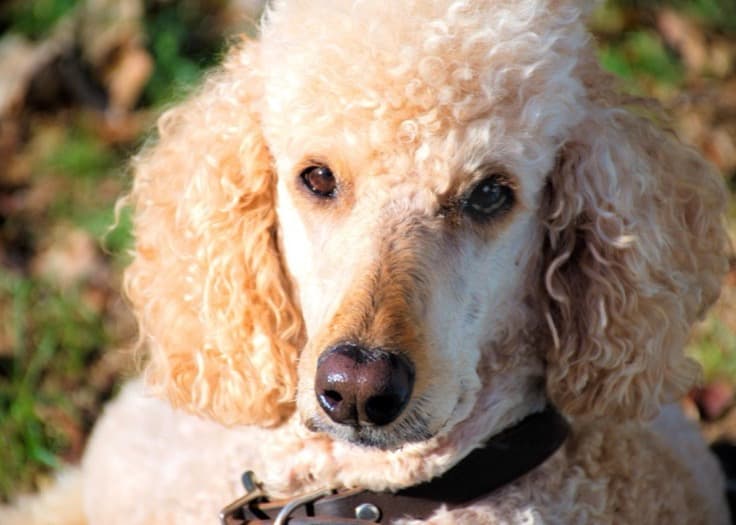
Stats at a Glance
- Size
- Large
- Energy
- High
- Shedding
- Low
- Trainability
- Very High
- Apartment
- Possible (daily exercise required)i
- Needs committed daily routine
- Grooming
- Highi
- Barking
- Low to Moderate
- Exercise
- 60–90 min
- With Kids
- Ofteni
- Best with older, active children
- With Dogs
- Often
- With Cats
- Often with socializationi
- Adaptable; usually good
- Origin
- Germany / France
Trait Score Snapshot
Standard Poodles are large, athletic dogs known for exceptional intelligence, a curly low-shedding coat, and a people-oriented temperament. Originally developed as water retrievers in Germany and France, they combine physical endurance with strong responsiveness to training, traits that carry through into modern companion dogs.
Despite the breed's elegant reputation, Standard Poodles are working dogs at heart. They need consistent exercise, regular mental engagement, and intensive coat maintenance. Low shedding does not mean low maintenance, the coat grows continuously and requires professional grooming every 4–8 weeks.
This guide is informational and not veterinary advice. Consult a licensed veterinarian for medical concerns.
Bottom line: A Standard Poodle is a strong fit for active owners who want a highly trainable, lower-shedding large dog and are prepared for a significant grooming schedule and consistent daily exercise. It is a weaker fit for households looking for low-maintenance ownership or a dog content with minimal interaction and stimulation.
Size & lifespan
Standard Poodles typically weigh 45–70 pounds and stand 18–24 inches tall at the shoulder, with males generally larger than females.
The typical lifespan is 12–15 years, with some well-cared-for dogs living beyond 15 years.
History & origin
The Standard Poodle originated in Germany as a water retriever, the name derives from the German Pudel, meaning to splash in water. The breed was developed to retrieve waterfowl for hunters, and the traits that made it effective in that role (strong swimming ability, trainability, and attentiveness to the handler) remain central to the modern dog.
The distinctive "poodle clip" originated as a practical working decision, not a style choice: hunters trimmed the coat to reduce drag through water while leaving protective hair over joints and the chest. The breed was later refined in France, where it became associated with court culture and developed a reputation as a companion and performance dog, a reputation that has since somewhat obscured its working-dog origins.
The AKC recognized the Standard Poodle in 1887. Despite their long association with elegance, Standard Poodles are working dogs at heart, and the athleticism and responsiveness that defined the original retriever define the modern companion.
Lifestyle fit
- Apartment Living: Conditional fit, possible only with 60–90+ minutes of daily outdoor exercise; a home with yard access is better suited
- First-Time Owners: Good fit for committed first-time owners, highly trainable, though grooming commitment is significant
- Families with Kids: Good fit in structured family homes, affectionate and adaptable, with normal supervision around younger children
- Active Households: Strong fit
- Low-Energy Homes: Not a natural fit, high daily exercise needs make this breed better suited to active households
- Seniors: Possible, highly trainable and responsive, but exercise and grooming demands are significant; best suited to active seniors
Quick take: Is a Standard Poodle right for you?
Pros
- Highly trainable, one of the most responsive large breeds
- Low-shedding coat reduces loose hair on floors and furniture
- Athletic and versatile; suits obedience, agility, retrieval, and service work
- Affectionate and strongly people-oriented
- Long lifespan for a large breed (12–15 years)
Cons
- Professional grooming every 4–8 weeks, a significant ongoing cost
- High daily exercise demand; not suited to low-activity households
- Separation anxiety risk when alone-time routines are not established early
- Above-average health costs (Addison's disease, GDV risk)
Best for
- Owners who enjoy training and regular interaction
- Households wanting a lower-shedding large dog
- Families seeking an intelligent, affectionate companion
- People willing to commit to professional grooming every 4–8 weeks
Not ideal for
- Owners looking for minimal grooming
- Households wanting a low-interaction or independent dog
- People unable to provide consistent daily exercise
- Those unprepared for the ongoing cost of professional coat maintenance
What living with a Standard Poodle is actually like
Expect a dog that pays close attention to household routines, moving between rooms with you, anticipating transitions, and noticeably unsettled when under-stimulated or left alone for long stretches. Day-to-day life is shaped by three non-negotiables: daily structured exercise, professional grooming every 4–8 weeks, and consistent mental engagement to keep the dog settled indoors. For the right household, that combination produces a highly responsive and rewarding companion. For one that underestimated any of those three factors, the result is a restless dog with a matting coat and too much energy and nowhere to put it.
Temperament & personality
Standard Poodles are often described as intelligent, alert, and strongly people-oriented.
Highly intelligent and responsive
Standard Poodles consistently rank among the most trainable breeds. Compared to more food-driven retrievers like the Labrador Retriever, Standard Poodles often respond strongly to both handler engagement and mental challenges, making them well-suited for obedience, agility, and service work.
Social and companion-oriented
Many Standard Poodles prefer companionship over extended alone time. Dogs left isolated for long periods may develop attention-seeking behaviors or stress responses.
Sensitive and observant
Standard Poodles are attentive to their environment and can be sensitive to household tension or inconsistent handling. Positive reinforcement and structured routines typically produce the best results, harsh or forceful training methods often backfire.
Exercise needs: How much activity does a Standard Poodle need?
Most Standard Poodles benefit from 60–90+ minutes of daily activity, combining physical exercise and structured mental stimulation.
A typical routine may include:
- Brisk walks or jogging
- Off-leash play in a secure area
- Retrieving games (the breed's historical working task)
- Obedience training sessions
- Puzzle toys or scent games
Mental stimulation is essential
Because of their high intelligence, Standard Poodles can become bored and develop problem behaviors without consistent mental engagement.
Signs of under-stimulation:
- Excessive barking or vocalization
- Destructive chewing
- Restlessness or pacing indoors
- Attention-seeking behaviors
For other active breeds, see: High-Energy Dog Breeds
Shedding & grooming
Standard Poodles shed significantly less than most breeds, but coat care is demanding and ongoing.
Do Standard Poodles shed?
They shed considerably less than double-coated breeds, but no dog is completely non-shedding. Hair tends to catch in the curly coat rather than falling onto floors and furniture, which reduces loose hair but increases matting risk if the coat is not regularly brushed.
Grooming routine
- Professional grooming every 4–8 weeks (non-negotiable for most owners)
- Brushing several times per week between appointments to prevent matting
- Ear cleaning regularly, floppy ears with hair in the canal are prone to infection
- Nail trimming every 3–4 weeks
- Dental hygiene
Grooming costs represent a significant ongoing expense. Budget for professional appointments year-round, this is not a low-cost coat to maintain.
Are Standard Poodles hypoallergenic?
No dog is fully hypoallergenic. The low-shedding coat means fewer allergens are distributed around the home, and some allergy-sensitive individuals tolerate Standard Poodles better than heavy shedders. However, reactions depend on the individual person, and there is no guarantee of tolerance.
Training & behavior
Standard Poodles are widely considered one of the most trainable breeds.
Training difficulty
Generally considered very easy to train when consistent, reward-based methods are used. They are quick learners and pick up new commands rapidly.
Common behavior considerations
- Separation anxiety if socialization to alone time is not established early
- Attention-seeking behaviors in under-stimulated dogs
- Alert barking that can escalate without management
- Adolescent energy (roughly 6–18 months) that may temporarily increase intensity
Practical training tips
- Begin basic obedience early, Standard Poodles absorb commands quickly.
- Establish a consistent alone-time routine to reduce separation-related stress.
- Channel energy into structured activities (retrieval, agility, nosework).
- Use positive reinforcement, this breed is sensitive and responds poorly to harsh corrections.
Are Standard Poodles good family dogs?
Standard Poodles are generally considered a strong family companion breed. They tend to be affectionate, patient, and adaptable across different household types.
They often:
- Bond closely with household members including children
- Adapt well to structured family routines
- Show patience in supervised interactions with younger children
Consistent training and supervision remain important, especially with very young children, size and energy during play can cause accidental knocks.
For more family-oriented breeds, see: Best Dogs for Families
Are Standard Poodles good for apartments?
Apartment living is possible but requires a genuine commitment to daily outdoor exercise. Standard Poodles are large, high-energy dogs, without adequate activity, apartment confinement leads to restlessness and problem behaviors.
They are generally well-mannered indoors when their exercise needs are met, and their lower barking level is a practical advantage in shared-wall living. But size and exercise demand make this a conditional fit, not a natural one.
For apartment-suited breeds, see: Best Dogs for Apartments
Adoption, rescue, and foster considerations
A common reason Standard Poodles enter rescue is a mismatch around grooming costs and exercise demands. Owners drawn to the low-shedding coat sometimes underestimate the professional grooming commitment, or find that the breed's energy level and need for daily engagement exceeds what their household can sustain.
Adult adoption can be a strong choice with Standard Poodles. A foster caregiver can tell you what a puppy cannot: how the dog handles time alone, whether separation anxiety is a factor, how it tolerates grooming, and whether its actual energy level fits a realistic daily routine. With a lifespan of 12–15 years, adopting an adult at age 3–5 still leaves many years of companionship.
Standard Poodle mixes, including labradoodle and goldendoodle types, appear at general shelters and rescue organizations regularly, often with the same grooming expectations and mental stimulation needs described here. If you are considering a standard doodle-type mix, this profile is directly applicable regardless of breed documentation. The adoption readiness guide covers what to ask before committing.
Ask the rescue or foster:
- How does this dog handle being home alone, any signs of separation anxiety or destructive behavior?
- What is the current grooming schedule, and how does the dog tolerate brushing and professional appointments?
- How does the dog behave around children and other pets?
- Any history of digestive episodes, bloating, or unusual health events?
- What does a typical day of exercise look like, walks, off-leash time, or structured activity?
Common Standard Poodle owner challenges
Grooming commitment
Professional grooming every 4–8 weeks is a maintenance reality, not an option. Without regular brushing between appointments, the curly coat mats quickly, particularly behind the ears and in leg furnishings. Budget for grooming costs before adopting, and plan for several brushing sessions per week at home.
Separation anxiety
Standard Poodles bond closely with their people and can develop stress responses, pacing, vocalization, destructive behavior, when left alone without preparation. Establishing a consistent alone-time routine from early on significantly reduces the risk. Dogs that go from constant company to abrupt long isolation periods are most vulnerable.
Managing the adolescent phase
Between roughly 6 and 18 months, Standard Poodles can be high-energy and occasionally inconsistent in their responsiveness. This is a normal developmental phase, not a training failure, but it requires patience and consistent positive reinforcement. Owners who remain consistent through adolescence typically find the adult dog substantially calmer and more settled.
Health considerations
Common health considerations
- Addison's disease (hypoadrenocorticism): Elevated prevalence in Standard Poodles; can be managed with medication once diagnosed
- Bloat / GDV (gastric dilatation-volvulus): A life-threatening emergency more common in large, deep-chested breeds; knowing early signs is important
- Hip dysplasia: A concern in large breeds generally; OFA health testing is recommended for breeding dogs
- Sebaceous adenitis: A skin condition with elevated incidence in Standard Poodles; affects coat quality and skin health
- Epilepsy: Idiopathic epilepsy has been documented in the breed at higher rates than many others
Questions to ask your shelter or vet
- Any health testing history for the parents (OFA hips, Addison's screening)?
- Any history of skin issues, unusual hair loss, or coat changes?
- Any history of digestive episodes, bloating, or abdominal distress?
- Any history of seizures or neurological episodes?
- What is the current weight and body condition score?
Consult a veterinarian for medical advice specific to your dog.
Cost to own a Standard Poodle
Estimated monthly range: $180–$430+ for most owners.
Row ranges show common category costs; the total reflects more realistic monthly ownership, including small recurring supplies and misc. expenses not listed separately.
Professional grooming every 6–8 weeks is the dominant ongoing cost — clips run $70–$120+ for a Standard Poodle depending on coat length and region. Between appointments, daily brushing is required to prevent matting. GDV (bloat) is a real risk for deep-chested large breeds and makes pet insurance a practical recommendation.
For a full methodology and breakdown by size: How Much Does a Dog Cost Per Month?
Want a personalized estimate? Use the Monthly Cost Calculator to customize by breed, size, grooming profile, and health risk.
Similar breeds to research
If you are drawn to a Standard Poodle, consider these profiles:
- Labrador Retriever, comparable energy and family temperament; sheds heavily, lower grooming cost
- Golden Retriever, similar warmth and trainability; sheds heavily, lower grooming cost than a Standard Poodle
- Doberman Pinscher, athletic and highly trainable like the Standard Poodle; guardian instinct rather than retriever temperament, with cardiac monitoring recommended