Doberman Pinscher vs Standard Poodle: Grooming, Experience & Lifespan
Compare Doberman Pinscher vs Standard Poodle on grooming, beginner fit, lifespan, and family compatibility to choose the right large breed for your home.
Updated
Quick Verdict
Better fit for families with kids
Standard Poodle
Doberman Pinscher: Training and supervision requirediEarly training and socialization recommended given size and protective natureStandard Poodle: Best with older, active childreniGenerally good with children; their attentiveness and gentle nature suit family life well, though socialisation and adult supervision around young kids are always recommended
Standard Poodle
Doberman Pinscher: Not recommendedStandard Poodle: Beginner-friendly
Doberman Pinscher
Doberman Pinscher: LowiVery short smooth coat; occasional brushing and bath is all the maintenance requiredStandard Poodle: HighiProfessional clipping every 6–8 weeks required; daily brushing needed to prevent matting between appointments
Standard Poodle
Doberman Pinscher: Early intro recommendediCan coexist with cats when introduced properly, especially from puppyhood; working instincts and size mean adult introductions require more structure and timeStandard Poodle: Adaptable; usually goodiIntelligent and socially adaptable; Standard Poodles generally adjust well to cats given proper introduction — low-to-moderate prey drive makes coexistence manageable in most households
Neither ideal
Doberman Pinscher: Very high exercise demandsiHigh exercise and mental stimulation needs mean apartment living requires a very active owner and daily outdoor commitmentsStandard Poodle: Needs committed daily routineiSize and high energy require significant daily exercise; possible with a very active owner and consistent outdoor routine, but homes with outdoor access are better suited
Verdicts are based on trait ratings. Always evaluate individual dogs and confirm behavior with the shelter, foster, or rescue organization.
Stats at a Glance
| Trait | Doberman Pinscher | Standard Poodle |
|---|---|---|
| Size | Large | Large |
| Energy | High | High |
| Shedding | Low to Moderate | Low |
| Grooming | Low | High |
| Trainability | Very High | Very High |
| Barking | Moderate | Low to Moderate |
| Apartment Friendly | Challenging | Possible (daily exercise required) |
| Good With Kids | Older kids recommendedTraining and supervision required | OftenBest with older, active children |
| Good With Dogs | DependsEarly socialization key | Often |
| Good With Cats | Possible with socializationEarly intro recommended | Often with socializationAdaptable; usually good |
| Daily Exercise | 60–90 min/day | 60–90 min/day |
| Typical Lifespan | 10–13 years | 12–15 years |
| Beginner Friendly | Not recommended | Beginner-friendly |
Doberman Pinschers and Standard Poodles share more than most people expect: both are large, high-energy breeds with Very High trainability and nearly identical daily exercise requirements. Both perform well in structured training and form close bonds with their owners. Where they diverge sharply is grooming commitment, owner experience required, purpose, and lifespan, and those differences tend to be decisive.
Main difference: The Doberman Pinscher is the low-grooming dog here, its short smooth coat needs minimal maintenance, but it demands an experienced owner and carries a strong protective instinct. The Standard Poodle requires significant ongoing coat care but is one of the most beginner-accessible large breeds, lives meaningfully longer, and suits a broader range of household configurations.
Who should choose each breed?
Choose a Doberman Pinscher if
- You have prior experience with large, strong-willed working breeds and can provide consistent structure and confident handling
- Protection and guardian function are genuine priorities for your household, not just an aesthetic preference
- Minimal coat maintenance is important, the Doberman's smooth coat requires almost no professional grooming
- You want a highly responsive, athletic dog for demanding sport, working, or personal protection roles
Choose a Standard Poodle if
- You want a versatile, highly trainable large breed that is accessible for first-time or intermediate owners
- A longer-lived companion matters, typical lifespan 12–15 years, with a median around 14
- You can accommodate a regular professional grooming schedule and daily coat brushing
- Your household includes children and you want a large breed with a more instinctively gentle family temperament
- Low shedding is a priority, the Poodle's curly coat keeps fur off surfaces and clothing
Size and build
Both breeds are large dogs. The Doberman Pinscher typically weighs 60–100 pounds and stands 24–28 inches tall, with a lean, muscular, athletic build. The Standard Poodle typically weighs 45–70 pounds and stands 18–24 inches tall, lighter and more square in frame than the Doberman, but still a substantial dog.
The size and physical presence difference is most relevant for families with young children or smaller living environments. The Doberman's lean power and strength require more management around small children than the Standard Poodle's build, which, while also large, is less physically imposing.
Temperament and personality
Both breeds are intelligent, people-oriented, and capable of close bonds with their households. The differences in temperament are significant and stem from purpose.
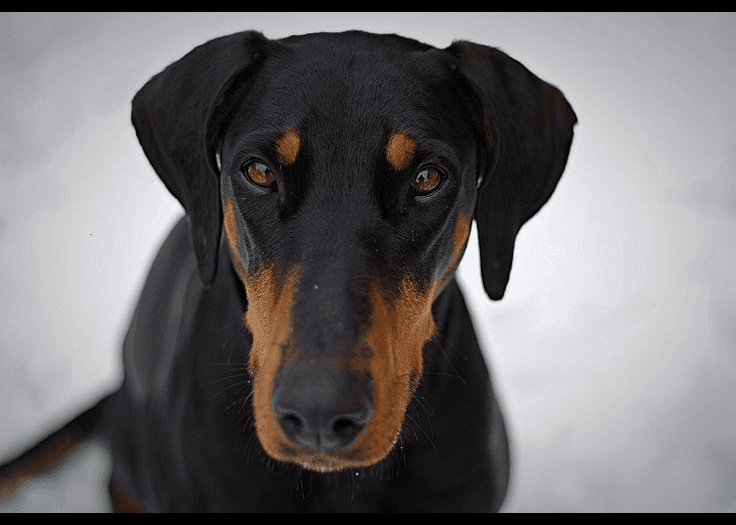
The Doberman Pinscher is a working dog with protective instincts. It is loyal, alert, and highly responsive to its handler, a dog that forms a deep bond with its household and takes an active interest in its environment. That alertness extends to strangers and perceived threats. Without consistent early socialization and proper obedience training, those protective instincts can become liabilities, reactivity, guarding behavior, and difficulty in public. In experienced hands, the Doberman is a remarkable companion. In the wrong hands, the same traits create serious problems.
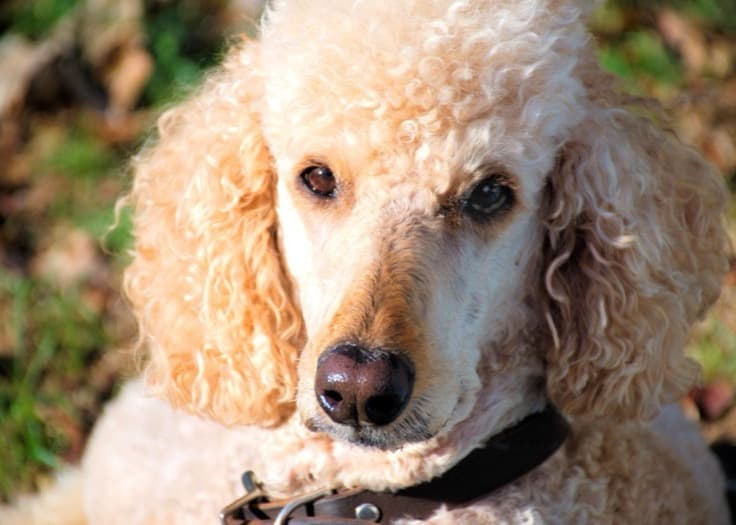
The Standard Poodle is alert and engaged but lacks the territorial or protective drive of the Doberman. Its intelligence is channeled into responsiveness, problem-solving, and close interaction with its people rather than guardianship. Poodles are adaptable across household configurations, tend to handle new people and environments well when properly socialized, and are considerably less likely to exhibit reactive or guarding behavior than working breeds. For most family configurations, the Poodle's temperament is the lower-risk choice.
Both breeds have Moderate alone-time tolerance, neither thrives on long daily absences, and both do better with companionship as part of daily life.
Exercise and stimulation needs
Exercise demands are effectively identical. Both breeds need 60–90 minutes of vigorous activity daily, and both require more than a leash walk, they need off-leash time, athletic engagement, and mental stimulation as part of that routine.
The Doberman benefits from directional, purposeful activity: distance running, agility, protection sport, or structured training sessions that give its working drive somewhere to go. Without that purposeful outlet, Dobermans can become restless, destructive, or anxious. The Standard Poodle is equally athletic and excels at varied activities including retrieving, agility, and swimming. It also benefits meaningfully from mental stimulation, puzzle feeders, training sessions, and novel environments, beyond physical exercise alone.
For either breed, the exercise commitment is non-negotiable. Prospective owners who cannot guarantee 60–90 minutes of genuine vigorous activity daily should consider a lower-energy breed.
Grooming and coat care
The grooming gap between these breeds is among the largest in any large-breed comparison.
Doberman Pinscher: Very short smooth coat. Needs occasional brushing to remove loose hair, a bath when dirty, and an ear wipe periodically. No professional grooming required. Budget $20–40 per month at most. This is genuinely minimal coat work.
Standard Poodle: Curly coat that does not shed visibly onto surfaces, but requires significant active maintenance. Professional clipping every 6–8 weeks is mandatory, skip it and the coat mats badly, with correction requiring more time and money than prevention would have. Daily brushing at home between appointments is also required. Budget $80–160 per month on average for professional grooming. The Poodle keeps your furniture hair-free, but it exchanges that advantage for a significant recurring grooming cost and home maintenance routine.
For a broader comparison of breeds by shedding and coat profile, see Low-Shedding Dogs.
Training and behavior
Both breeds are rated Very High for trainability. The gap is not in capability, it is in what the dog does with that intelligence and how it responds to different owner approaches.
The Standard Poodle is unusually responsive to reward-based training. It picks up new cues quickly, retains them reliably, and actively seeks out training interactions. It is forgiving of handler errors, which makes it accessible to owners still building their skills. Recall, leash manners, and household rules come together quickly and stay consistent.
The Doberman Pinscher is equally capable, but its training must be handled with more precision and consistency. It is sensitive to leadership and reads its owner's confidence and clarity carefully. Reward-based methods work well, but the Doberman also requires a handler who can hold structure and not yield on important boundaries. Inconsistency, in rules, corrections, or expectations, produces a confused or dominant-acting dog much faster than it would in a Standard Poodle.
Both breeds benefit from lifelong training engagement. Neither is a dog you train once and stop.
For a broader look at highly trainable large breeds, see Easiest Dogs to Train.
Family and household fit
Which is better for families with children?
Both breeds can be excellent family dogs, with different conditions attached. The Standard Poodle tends to be more reliably gentle across a wide range of household configurations, including families with young children who are still learning to interact with dogs. Its attentiveness and adaptability make it a lower-management choice.
The Doberman Pinscher can form a deep, protective bond with children it knows well, many Doberman owners describe their dogs as devoted and gentle with the family. But its size, strength, and protective instincts require consistent adult supervision, especially around visitors or in situations that trigger its guarding response. Households with young children who regularly have unfamiliar guests should factor that reality into the decision.
See Best Dogs for Families for broader guidance on family configurations.
Apartment and living environment
Neither breed is suited to apartment living. The Doberman's exercise demands and working energy make it a challenging fit for shared-wall buildings regardless of how active the owner is. The Standard Poodle can work in a home without a yard if the owner is truly committed to a substantial daily outdoor routine, but it is not the breed's natural fit. Both are better served by homes with outdoor access.
Cost comparison
These are planning ranges, not fixed costs. Regional variation, insurance, adoption source, and individual health history all affect actuals significantly.
| Cost area | Doberman Pinscher | Standard Poodle |
|---|---|---|
| Food (monthly) | $65–$110 | $60–$100 |
| Grooming (monthly avg) | $20–$40 | $80–$160 |
| Routine vet care (monthly avg) | $50–$85 | $45–$80 |
| Estimated ongoing monthly range | $135–$235 | $185–$340 |
The grooming line is the dominant cost differentiator. The Doberman's smooth coat needs almost no professional investment; the Standard Poodle's curly coat requires a consistent professional schedule. Doberman owners should also budget for cardiac screening and potential DCM-related veterinary costs, which can raise long-term health costs above the routine baseline. The Poodle has no single dominant inherited condition at this level of planning.
For broader budgeting guidance, see How Much Does a Dog Cost Per Month? or use the Monthly Cost Calculator for a breakdown by size and grooming profile.
Final decision: Doberman Pinscher or Standard Poodle?
The decision usually comes down to one of three factors: grooming commitment, owner experience, or household purpose.
If grooming is a constraint, you want a large breed with minimal coat maintenance, the Doberman Pinscher wins clearly. Its smooth coat is about as low-maintenance as any large breed gets. But that advantage comes attached to a significant experience requirement: this is not a dog for owners who have not handled strong, protective working breeds before.
If you are a first-time or intermediate owner of large breeds, the Standard Poodle is the stronger choice. It is one of the most capable and accessible large breeds available, highly trainable, versatile, gentle, and long-lived. The grooming schedule is a real recurring commitment, but the tradeoff is a dog that is considerably more forgiving of owner learning curves and household variation.
If protection is a genuine household priority, not just preference, the Doberman is the appropriate choice. But that decision should be made honestly and only alongside a serious commitment to training, socialization, and responsible management.
If you are evaluating dogs at a shelter, rescue organization, or through a foster network rather than selecting a specific breed, the traits described here apply equally to any dog showing this profile: large, athletic, short or curly coat, high energy, strong responsiveness to training. These characteristics appear in many mixed-breed dogs. A dog's behavior in a foster home, or the notes from a rescue volunteer who has spent time with the animal, will tell you more about individual temperament than breed category alone. The Adoption Readiness Guide can help you prepare for that process.