Australian Shepherd vs Border Collie: Trainability, Herding Drive & Shedding
Compare Australian Shepherd vs Border Collie on trainability, herding instincts, shedding, family fit, and long-term ownership demands to find which high-drive working breed fits your household.
Updated
Quick Verdict
Better fit for families with kids
Both suitable with supervision
Australian Shepherd: Supervision recommendediHigh energy and herding instincts mean supervision is important, especially with young childrenBorder Collie: Best with older kidsiStrong herding instincts may cause them to chase or nip; best with older, calm children
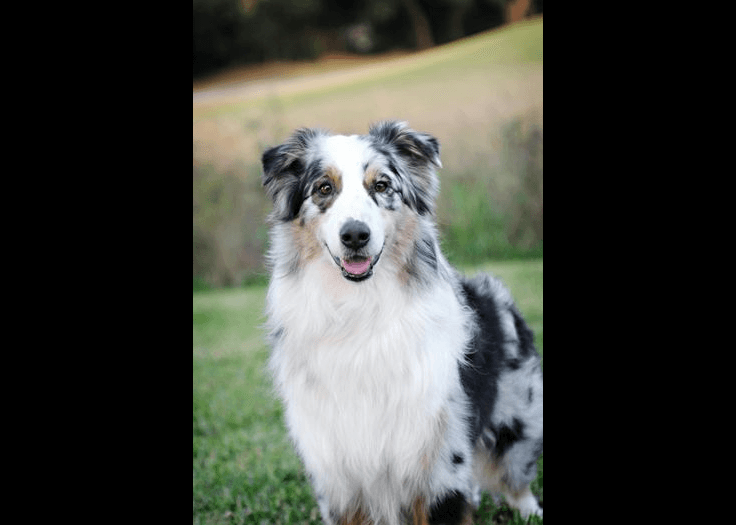
Australian Shepherd
Australian Shepherd: Some challengesBorder Collie: Not recommended
Neither ideal
Australian Shepherd: Needs intense daily activityiNeeds extensive daily exercise and mental stimulation; typically better suited to a home with outdoor spaceBorder Collie: Very high exercise needsiRequires very high daily exercise and mental stimulation; apartment living is not recommended for this breed
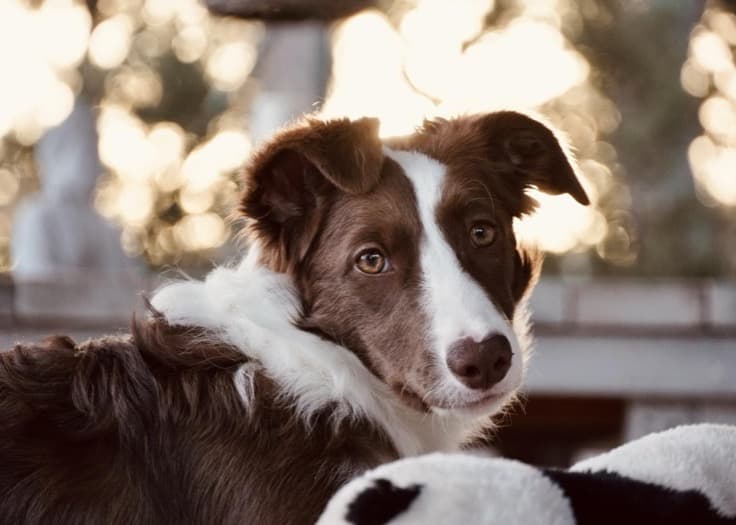
Border Collie
Australian Shepherd: ModerateiRegular brushing 3–4x per week; heavy seasonal shedding adds maintenance burdenBorder Collie: Low to ModerateiBrushing 2–3x per week; rough coats need more attention than smooth coats
Similar for both
Australian Shepherd: Herding instinct may target catsiHerding instinct can redirect toward cats; early socialization and impulse control training help, but ongoing management is often still neededBorder Collie: Herding instinct presentiStrong herding instinct may fixate on fast-moving cats; can coexist with proper introduction and impulse control training, but herding behaviors toward cats often persist
Verdicts are based on trait ratings. Always evaluate individual dogs and confirm behavior with the shelter, foster, or rescue organization.
Stats at a Glance
| Trait | Australian Shepherd | Border Collie |
|---|---|---|
| Size | Medium | Medium |
| Energy | Very High | Very High |
| Shedding | High | Moderate |
| Grooming | Moderate | Low to Moderate |
| Trainability | High | Very High |
| Barking | Moderate to High | Moderate to High |
| Apartment Friendly | Challenging | No |
| Good With Kids | Yes (with supervision)Supervision recommended | Yes (with supervision)Best with older kids |
| Good With Dogs | Often | Often |
| Good With Cats | Possible with socializationHerding instinct may target cats | Possible with socializationHerding instinct present |
| Daily Exercise | 90–120+ min/day | 90–120+ min/day |
| Typical Lifespan | 12–15 years | 12–15 years |
| Beginner Friendly | Some challenges | Not recommended |
Both the Australian Shepherd and the Border Collie are high-drive herding dogs that demand daily structured exercise, mental work, and consistent training. In most of the ways that define the ownership experience — energy level, daily time commitment, herding instincts, family suitability — they are cut from the same cloth. The Border Collie turns the dial slightly higher on trainability, cognitive demand, and obsessive tendency risk; the Australian Shepherd carries more coat but a marginally wider temperament range. For most prospective owners, the key question is not which breed is better, but which fits the specific household more accurately.
Main difference: Border Collies have a higher trainability ceiling and shed less, but place greater cognitive demands on their owners and are a stricter non-fit for apartments and beginner households. Australian Shepherds are marginally more adaptable — across living situations, family composition, and owner experience level — while sharing the same core demand profile.
Who should choose each breed?
Choose an Australian Shepherd if
- You want a highly trainable herding dog with slightly more temperament flexibility across household types
- You have an active family and want a breed that can integrate with children more manageably, with early training and structure
- The wide coat color and pattern variety matters to you (blue merle, red merle, black tri, red tri, and more)
- You live in a situation that is imperfect for a herding dog — a challenging apartment or household without prior high-drive dog experience — but are genuinely committed to the daily investment the breed requires
- You want a breed that excels in dog sports and structured activity without the extreme cognitive demands the Border Collie brings
Choose a Border Collie if
- You are seriously committed to advanced training, competitive agility, herding trials, or obedience sport
- You want the highest trainability ceiling in a medium-sized dog
- Shedding and grooming management are priorities — the Border Collie's Moderate shedding is meaningfully lower than the Aussie's High
- You have the experience and daily structure to manage a dog with very high cognitive needs and a known tendency toward obsessive behaviors when under-stimulated
- Your household has older children, not young ones, and you can manage a stricter herding-instinct profile
Size and build
These are both medium-sized dogs, and the overlap in day-to-day experience is more significant than the weight gap suggests. Australian Shepherds typically weigh 40–65 pounds and stand 18–23 inches at the shoulder. Border Collies average 30–55 pounds and stand 18–22 inches. In most household contexts — furniture presence, walking effort, boarding cost — the practical difference is modest.
The Aussie's heavier build and denser double coat contribute to its higher grooming burden. The Border Collie's leaner build is part of why its shedding is rated lower despite also being a double-coated working breed.
Temperament and personality
This is where the similarities are most striking — and where the differences matter most for practical ownership.
Both breeds are engaged, observant, and handler-focused. They form close bonds with their people, want to be involved in household activity, and show restlessness or problem behavior when they are not getting enough structure. Neither is suited to a low-key household that treats their dog as a background presence.
Australian Shepherds typically show a slightly wider temperament range across individuals. Most are strongly bonded with family and reasonably welcoming of confident strangers after initial introduction. The herding instinct is present and real — chasing, shadowing, nipping at moving targets — but varies in intensity across individual dogs more than in Border Collies. Aussies can be reserved with new people but tend toward affection rather than sharp reactivity once comfortable.
Border Collies are more uniformly intense. The breed's herding drive shows up as a fixed stare, crouched stalking posture, and strong compulsion to chase or redirect any moving target. This is instinct, not aggression — but it is more persistent and harder to redirect than in most Aussies. Border Collies also show a stronger tendency toward obsessive behaviors (chasing shadows, fixation on light reflections, compulsive fetching) when they lack sufficient structured stimulation. These patterns, once established, are difficult to interrupt.
Both breeds require active herding instinct management with young children or smaller pets. Neither is a passive companion.
Exercise and stimulation needs
This is the area of most complete overlap. Both breeds require 90–120+ minutes per day of combined physical and mental activity. Both need more than a walk — training sessions, problem-solving games, structured fetch, or active sport are part of a daily minimum.
The distinction here is cognitive depth. Border Collies typically benefit from more varied, challenging mental work — they habituate to repetitive games faster and may develop substitute behaviors (object obsession, compulsive activity patterns) if their cognitive engagement is monotonous. Australian Shepherds thrive with high stimulation but show slightly more tolerance for days when enrichment is imperfect.
Neither breed is well served by owners whose lifestyle cannot consistently provide this level of daily investment. Under-stimulation produces problem behaviors in both — demand barking, destructive chewing, reactivity — and these patterns become more difficult to resolve the longer they go unaddressed.
Shedding and grooming
This is one of the clearest practical differences between the two breeds.
Australian Shepherds shed heavily — rated High — with consistent year-round coat release and pronounced seasonal peaks. The medium-length, wavy double coat creates feathering on the legs, chest, and tail that accumulates mats if not brushed out. A practical grooming baseline is 3–4 brushing sessions per week, more during heavy seasonal coat blows.
Border Collies shed moderately — rated Moderate — with similar seasonal patterns but lower overall volume. Brushing 2–3 times per week is generally sufficient for both rough and smooth coat varieties. Rough-coated Border Collies require slightly more attention; smooth-coated individuals are among the lower-maintenance medium dogs.
If surface shedding — on clothes, furniture, upholstery — is a meaningful concern, the Border Collie has a genuine advantage here. The gap is real enough to be a deciding factor for some households.
Training and behavior
Both breeds are exceptional training partners — among the most capable in the dog world. The comparison here is between two breeds that both excel, but at different levels.
Australian Shepherds are rated High for trainability. They are responsive to consistent reinforcement, pick up new behaviors readily, and excel in obedience, herding, and agility. The breed's intelligence means it learns unwanted patterns as quickly as desired ones — inconsistency creates problem habits fast.
Border Collies are rated Very High for trainability — the highest rating in the stat system. In competitive obedience, herding trials, and agility, the Border Collie is the dominant breed at the highest levels. They execute with greater precision, maintain focus under distraction more reliably, and tend to generalize learned cues faster across new contexts. For serious dog sport participants, this difference is significant.
For the average owner — daily routines and basic to intermediate obedience — the practical gap is smaller than sport performance suggests. Both breeds require the same consistency in training approach. The main behavioral difference in everyday households is the Border Collie's more pronounced tendency toward obsessive patterns when its cognitive load is insufficient.
Barking: Both are rated Moderate-High and are similar in this regard. Alert barking, motion-triggered barking, and demand barking from under-stimulation are common to both.
Apartment and family fit
Which is better for apartments?
The Australian Shepherd is rated "Challenging" — meaning it's possible with rigorous daily commitment. The Border Collie is rated "No" — apartment living is not recommended.
The practical difference is cognitive: an Aussie owner in an apartment who genuinely delivers 90–120 minutes of combined physical and mental activity each day, maintains a structured routine, and actively prevents boredom behaviors can make it work. The number of people who can sustain this from an apartment indefinitely is lower than it sounds. Border Collies in apartments with any shortfall in that routine develop problem behaviors more quickly and more severely than Aussies.
Both breeds thrive considerably better in homes with outdoor access and space to decompress after exercise. If access to outdoor space is limited, the Australian Shepherd is the marginally less difficult choice.
For more guidance: Best Dogs for Apartments
Which is better for families with kids?
Both breeds are rated Yes for good with kids, but both carry herding-instinct caveats that are relevant to family households.
Australian Shepherds will often chase, shadow, or nip at running children — this is normal breed behavior, not aggression. Early training, management, and clear household rules around play significantly reduce the frequency and intensity of these incidents.
Border Collies have stronger, more persistent herding instincts. Their tendency to chase, circle, and nip at movement is more likely to show up under more circumstances and harder to fully redirect. They tend to suit older, calmer children better — children who can participate in training, respect the dog's boundaries, and not repeatedly trigger high-motion chasing scenarios.
Neither breed is a low-management choice in a household with young children. Families who invest in structured early training and consistent management of herding behaviors will have the best outcomes with either breed. If children in the household are under six or especially active and unpredictable, the Australian Shepherd's marginally broader temperament tolerance makes it the safer choice.
For more guidance: Best Dogs for Families
Which is easier for first-time owners?
Neither breed is recommended for first-time owners, but the Australian Shepherd's 2/5 beginner-friendliness offers a small margin over the Border Collie's 1/5.
The underlying difference is the Border Collie's higher cognitive demand and narrower tolerance for inconsistency. A first-time owner who underestimates the daily training commitment will see problem behaviors in both breeds — but Border Collies tend to escalate those behaviors more quickly and to more entrenched patterns. Their sensitivity to handling approach also means that aversive training methods cause more lasting behavioral damage in Border Collies than simply "not working." A committed first-time owner — someone who researches herding breed ownership seriously, invests in formal training, and genuinely structures daily activity — can succeed with an Australian Shepherd. That same ownership quality is required for a Border Collie, but with less margin for learning-curve mistakes.
For more guidance: Best Dogs for First-Time Owners
Health considerations
Australian Shepherd health
The most distinctive breed-specific concern in Australian Shepherds is the MDR1 gene mutation (also called the ABCB1 mutation), which affects how certain medications are processed — including common antiparasitic drugs. Affected dogs cannot safely receive normal doses of some medications and require adjusted protocols. A DNA test identifies whether a dog carries one or two copies of the mutation; this test is widely recommended before any medication use in the breed and is inexpensive relative to the risk.
Collie Eye Anomaly (CEA) and Progressive Retinal Atrophy (PRA) both occur in the breed. Any available eye health history or documentation from the shelter or rescue is worth asking about.
Hip dysplasia is present at rates typical of medium to large active dogs. Mobility history or prior screening is useful to know. Idiopathic epilepsy appears with some frequency — ask about any prior seizure history.
Typical lifespan: 12–15 years
Border Collie health
Border Collies share hip dysplasia and idiopathic epilepsy with the Aussie as notable concerns. The breed-specific eye condition is Progressive Retinal Atrophy (PRA) — a degenerative condition that can lead to blindness. Eye exam history is worth requesting for any Border Collie you are considering.
Some lines carry neuronal ceroid lipofuscinosis (NCL), a serious neurological condition. DNA tests for Border Collie–linked NCL variants are available; a shelter with full health history may have this information.
Typical lifespan: 12–15 years
Consult a licensed veterinarian for medical advice specific to your dog.
Cost comparison
These are rough planning ranges — actual costs vary by region, individual health, insurance, and adoption source.
| Cost area | Australian Shepherd | Border Collie |
|---|---|---|
| Food (monthly) | $55–$85 | $45–$75 |
| Grooming upkeep (monthly avg) | $35–$65 | $20–$40 |
| Routine vet care (monthly avg) | $40–$70 | $40–$70 |
| MDR1/ABCB1 DNA testing (Aussie) | $70–$100 one-time | — |
| PRA/NCL testing (Border Collie) | — | $80–$150 one-time |
| Training / enrichment (est. first year) | $700–$1,500+ | $700–$1,500+ |
| Estimated ongoing monthly budget | $160–$280 | $130–$230 |
The standout cost for both breeds is training and enrichment — formal classes, ongoing structured activity, and enrichment equipment are not optional for high-drive herding dogs. Australian Shepherd owners carry a slightly higher grooming cost given the heavier shedding load. The MDR1 DNA test is a modest one-time cost that provides valuable information before any medication is needed. Both breeds benefit from pet insurance given hip dysplasia and eye condition risk.
For broader budgeting guidance, see How Much Does a Dog Cost Per Month?
Final decision: Australian Shepherd or Border Collie?
For the specific household types that suit one more than the other, the choice is usually clear.
If you want the highest trainability ceiling, the lowest grooming burden between the two, and are committed to sport-level or advanced structured work, the Border Collie is the logical choice. It is the more precision-engineered working breed and performs at its best when matched with the right owner and the right level of daily engagement.
If you want a highly trainable, deeply engaging herding dog with marginally more temperament flexibility — suitable for a wider range of households, including families with children and active owners who are serious but not sport competitors — the Australian Shepherd is the better match. It asks nearly as much of its owner as the Border Collie does, but carries more room for the ordinary imperfections of daily life.
Both breeds share the same core requirement: daily structured activity, consistent training, and an owner who has genuinely thought through what owning a high-drive herding dog entails. Meeting that bar is what both breeds need — and what both reward spectacularly when it is met.
As with any breed, individual personality varies considerably. Meeting dogs through shelters, rescue organizations, or foster care before deciding is the most useful step — a foster caregiver can tell you about the individual dog's actual herding behavior, reactivity, and daily routine in a way no breed profile can.