Australian Shepherd: Temperament, Care & Lifespan
Learn about Australian Shepherd temperament, high exercise demands, and herding instincts, and whether this working dog is right for your household.
Updated
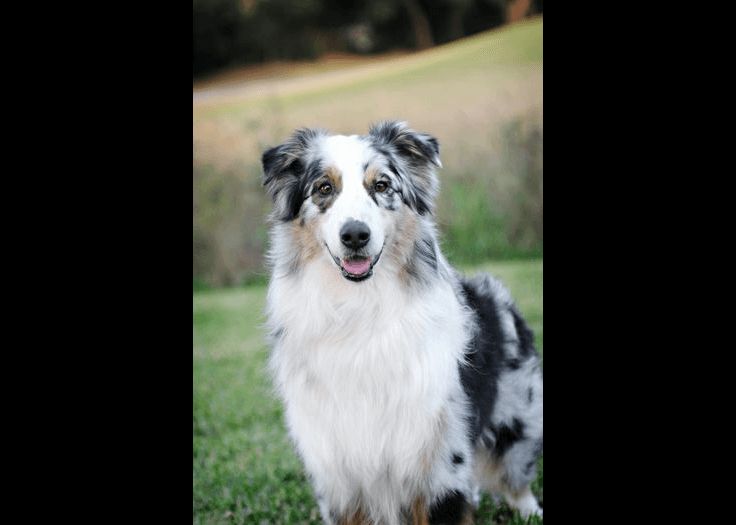
Stats at a Glance
- Size
- Medium
- Energy
- Very High
- Shedding
- High
- Trainability
- High
- Apartment
- Challengingi
- Needs intense daily activity
- Grooming
- Moderatei
- Barking
- Moderate to High
- Exercise
- 90–120+ min
- With Kids
- Yesi
- Supervision recommended
- With Dogs
- Often
- With Cats
- Possible with socializationi
- Herding instinct may target cats
- Origin
- United States
Trait Score Snapshot
| Trait | Score |
|---|---|
| Energy | ★★★★★5/5 |
| Shedding | ★★★★☆4/5 |
| Barking | ★★★★☆4/5 |
| Grooming demand | ★★★☆☆3/5 |
| Trainability | ★★★★☆4/5 |
| Apartment suitability | ★★☆☆☆2/5 |
| Beginner friendliness | ★★☆☆☆2/5 |
The Australian Shepherd is a medium-sized herding breed developed in the American West — athletic, highly intelligent, and built for a full day's work. Aussies are among the most trainable dogs you can find, and in the right home they are remarkably rewarding.
Owning one, however, is a genuine commitment. This breed needs structured daily exercise, consistent mental engagement, and an owner who understands herding instincts. Without those things, the same energy that makes them impressive becomes a management problem.
This guide is informational and not veterinary advice. Consult a licensed veterinarian for medical concerns.
Bottom line: An Australian Shepherd is a strong fit for active households that want a smart, trainable partner and are ready to provide daily structure, exercise, and mental work. It is a weaker fit for low-activity households or anyone seeking a low-maintenance dog.
Size & lifespan
Most Australian Shepherds stand 18–23 inches tall at the shoulder and weigh between 40–65 pounds, depending on sex and lineage.
The average lifespan ranges from 12–15 years, though genetics, diet, and activity level can influence longevity.
History & Origin
Accounts vary, but most histories agree the breed was developed in the western U.S. — not Australia — with naming influenced by imported herding dogs associated with Australia. One widely cited account traces the roots to Basque shepherds who immigrated to the American West during the 19th century, bringing their herding dogs with them after a period of working in Australia; American ranchers began calling these dogs "Australian Shepherds" based on that route of arrival.
The breed was steadily refined on American ranches throughout the 1800s and early 1900s, valued above all for herding stamina, intelligence, and versatility. After gaining wider public attention through rodeos and Western horse shows in the mid-20th century, the Australian Shepherd Club of America was founded in 1957. The American Kennel Club officially recognized the breed in 1993.
Today the Aussie remains one of the most popular herding breeds in the United States — equally common as a working ranch dog and as a sport, competition, and family companion.
Lifestyle Fit
- Apartment Living: Challenging — possible with consistent daily exercise and enrichment
- First-Time Owners: Often not ideal — the breed is intense and needs consistent training
- Families with Kids: Good fit in active households with structure and supervision
- Active Households: Excellent fit
- Low-Energy Homes: Poor fit
- Seniors: Generally not a good fit — unless the senior leads a very active lifestyle
Quick take: Is an Australian Shepherd right for you?
Pros
- Highly trainable and responsive to consistent instruction
- Excellent partner for dog sports, agility, and active outdoor life
- Strong bond with their people; engaged and attentive
- Long lifespan for a medium-sized working dog
Cons
- Very high daily exercise and mental stimulation requirement
- Herding instincts (nipping, chasing, shadowing) require active management
- Can develop anxiety or destructive behavior if under-stimulated
- Heavy year-round shedding with seasonal peaks
Best for
- Active individuals or families who enjoy daily training and activity
- Owners who want a “job” dog (obedience, agility, herding-style games, scent work)
- People who can provide mental work—not just walks
- Homes that can consistently reinforce structure and boundaries
Not ideal for
- Sedentary households
- Owners away most of the day with limited enrichment
- People who want a relaxed, low-maintenance companion
- Homes that can’t manage herding behaviors (nipping, shadowing, chasing movement)
What living with an Australian Shepherd is actually like
Expect a dog that is on — mentally and physically — most of the day. Aussies want to know what you're doing, where you're going, and whether there's a job involved. For an active household that builds training and outdoor time into a daily routine, that engagement feels like partnership. For a household that prefers a calm, self-sufficient companion, it feels like a full-time obligation.
The breed's herding instincts are real and present in most individuals, not just working lines. You will likely see some version of chasing, shadowing, or nipping at some point — especially with young children running or fast-moving stimuli. Early training and clear household rules make a significant difference.
On the upside: well-exercised, well-trained Aussies settle well at home, form strong bonds, and are among the most satisfying dogs to work with. The investment is high, but so is the return for the right owner.
Temperament & personality
Australian Shepherds tend to be engaged, observant, and quick-learning dogs. They are often described as "velcro dogs" who want to stay involved in whatever is happening in the home.
Very intelligent and quick to learn
They tend to learn patterns fast—both good habits and bad ones. Consistency matters: if a behavior works once (jumping, demand barking), it often becomes a routine.
Herding instincts and movement sensitivity
Many Aussies are naturally tuned to motion. That can show up as chasing, shadowing, or nipping—especially with kids running, bikes, or fast-moving dogs.
Loyal, sometimes reserved with strangers
They can be affectionate with family and more cautious with new people. Early socialization and calm exposure usually helps.
Exercise needs: How much activity does an Australian Shepherd need?
Most Australian Shepherds need 90–120+ minutes per day of combined physical activity and mental work.
A long walk alone usually isn’t enough. They do best when you add training reps, problem-solving, and “jobs”.
Why mental stimulation is critical
Mental work (obedience practice, puzzle feeders, scent games) helps prevent restlessness and creates an “off switch.”
Signs of under-stimulation
- Demand barking
- Pacing and restlessness
- Destructive chewing
- Hypervigilance (reacting to every sound/movement)
- Herding behaviors increasing (chasing/nipping)
Shedding & grooming
Shedding
Australian Shepherds often shed heavily, especially seasonally. Expect fur on clothes and furniture unless you brush regularly.
Grooming routine
A practical baseline:
- Brush 3–4x per week (more during shedding seasons)
- Regular coat checks for mats behind ears and in feathering
- Nail trims, ear checks, and dental care as standard maintenance
Colors & Coat Types
Australian Shepherds come in four recognized base colors, each with several pattern variations that generate many of the breed's most searched coat terms:
Base colors
- Blue merle — mottled gray and black patterning, often with white and/or tan markings. One of the most visually striking and widely searched Aussie looks.
- Red merle — mottled red and cream tones, sometimes with white and/or tan markings.
- Black — solid black with white and/or tan points.
- Red (liver) — a warm reddish-brown base with white and/or tan markings.
What "tri" means
The "tri" label (e.g., black tri, red tri) refers to dogs showing all three colors — the base color plus both white and copper/tan markings. A black bi or red bi, by contrast, has only two colors.
Coat texture
The coat is medium-length, straight to wavy, with a dense undercoat that contributes to heavy seasonal shedding. Feathering typically appears on the legs, chest, and tail. Merle coats do not affect care requirements — all coat types need the same brushing routine.
Training & behavior
Training difficulty
They are typically highly trainable, but they require consistency. This breed learns fast—and will invent their own “jobs” if you don’t provide one.
Common challenges
- Pulling on leash due to high drive
- Reactivity to motion (dogs, runners, bikes)
- Herding/nipping in young dogs
- Barking or alerting in busy environments
- Separation-related behaviors if not taught independence
Practical training tips
- Teach an “off switch” (place/settle) early
- Use structured enrichment daily (short sessions beat occasional long ones)
- Reward calm neutrality around motion triggers
- Practice recall and leash skills before adolescence ramps up
Are Australian Shepherds good with kids?
They can be excellent in families, but supervision is important—especially with younger kids.
Because of herding instincts, some Aussies may nip or chase when children run or squeal. Early training and management (gates, structured play, calm routines) makes a big difference.
Are Australian Shepherds good for apartments?
It depends.
Most Aussies are not naturally apartment-easy unless you provide:
- Daily exercise (90–120+ minutes)
- Daily mental stimulation
- A routine that prevents boredom barking
- Calm exposure training for hallway/elevator noises
If you want a more apartment-friendly, lower-demand breed, compare to:
Adoption, rescue, and foster considerations
A common reason Aussies enter rescue is mismatch around energy level and herding behavior — the breed's intensity often catches unprepared owners off guard. The breed's intelligence and drive can work against an unprepared household — chewing, barking, anxiety, or reactive behavior appear quickly when daily structure isn't in place.
Adopting an adult Aussie can actually be an advantage. A foster caregiver can tell you how the dog handles alone time, how they respond to children or other pets, and whether herding behaviors are present and manageable — information that isn't available with a puppy.
Ask the rescue or foster:
- Does the dog show herding or chasing behavior, and in what contexts?
- How does the dog behave when left alone for several hours?
- Has the dog shown reactivity to motion, other dogs, or strangers?
- Any history of eye, hip, or neurological concerns?
- What has the daily exercise and enrichment routine looked like?
Health considerations
Common health considerations
A few breed-linked conditions are worth knowing before you adopt:
- MDR1 gene mutation — a drug-sensitivity variant that affects how certain medications are processed. Common in Aussies and other herding breeds. A simple DNA test identifies affected dogs, and your vet can adjust treatment accordingly.
- Hereditary eye conditions — Collie Eye Anomaly (CEA) and Progressive Retinal Atrophy (PRA) occur in the breed. Ask about any available eye health history or documentation when adopting.
- Hip dysplasia — a concern in most medium and large active breeds. Ask your shelter or vet about any mobility history or prior screening.
- Epilepsy — idiopathic epilepsy appears with some frequency in the breed. If adopting, ask about any history of seizures.
Questions to ask your shelter or vet
- Have you noticed herding behaviors (nipping/chasing)?
- Any signs of noise sensitivity or reactivity?
- How does the dog handle being alone?
- Has the dog been tested for MDR1 or hereditary eye conditions?
- Any history of seizures, chronic ear issues, or mobility concerns?
Common Australian Shepherd owner challenges
Herding instincts and nipping
Many Aussies will chase, shadow, or nip at moving targets — children, runners, bikes, other pets. This is breed-typical behavior, not aggression, but it requires active management. Teaching impulse control and a solid "leave it" or "place" cue early makes a real difference.
Under-stimulation and problem behaviors
An Aussie that isn't getting enough daily work will find its own outlet. Demand barking, destructive chewing, pacing, and hypervigilance are common signs. The solution is usually structure and exercise — not correction.
Adolescent intensity
Like many high-drive breeds, Aussies can be especially demanding between roughly 8 and 18 months. Energy peaks, training retention can feel inconsistent, and reactivity sometimes surfaces. Consistent training through this window pays off significantly later.
Cost to own an Australian Shepherd
Estimated monthly range: $120–$280 for most owners.
| Expense | Typical monthly range |
|---|---|
| Food | $40–$80 |
| Routine vet care (annual checkups averaged monthly) | $20–$55 |
| Preventatives (flea, tick, heartworm) | $15–$40 |
| Grooming | $10–$20/mo |
| Training (recommended, especially year 1) | $15–$60 |
| Enrichment (puzzle feeders, toys, gear) | $10–$30 |
| Estimated total | $120–$280/mo |
Row ranges show common category costs; the total reflects more realistic monthly ownership, including small recurring supplies and misc. expenses not listed separately.
Training and enrichment are the two cost drivers that surprise most Aussie owners — both are ongoing, not one-time. Grooming tools (deshedding brush, mat comb) need periodic replacement. The breed's known health risks (MDR1 gene mutation, hereditary eye conditions) are worth a one-time DNA/eye screening in year one. MDR1 DNA test (~$60–$100), an eye health check, and where health history is unclear, a hip/joint evaluation are worth factoring into first-year planning for dogs without documented health history.
For a full methodology and breakdown by size: How Much Does a Dog Cost Per Month?
Want a personalized estimate? A Monthly Cost Calculator is in development — it will let you customize by breed size, coat type, health profile, and region. Explore planning tools →
Similar breeds to research
If you are drawn to an Australian Shepherd, consider these profiles:
- Border Collie — comparable intelligence and agility drive, but even more intense mentally; not more beginner-friendly
- German Shepherd — similar trainability and daily structure needs, with a stronger guarding instinct and clearer separation between work and rest
- Labrador Retriever — similar energy tier without the herding instincts; easier to manage for first-time owners who want an active but less demanding working-dog temperament
For a structured side-by-side: Australian Shepherd vs Border Collie · Australian Shepherd vs German Shepherd · Australian Shepherd vs Labrador Retriever
Australian Shepherd comparison pages
Other comparisons