American Bulldog: Temperament, Size & Care
Learn about American Bulldog temperament, athletic needs, dog selectivity, and how the American Bulldog differs from the English Bulldog before adopting.
Updated
Stats at a Glance
- Size
- Large
- Energy
- Moderate to High
- Shedding
- Moderate
- Trainability
- Moderate
- Apartment
- Challengingi
- Size and exercise needs
- Grooming
- Lowi
- Barking
- Moderate
- Exercise
- 60–90 min
- With Kids
- Yes (with supervision)i
- size and strength
- With Dogs
- Possible with managementi
- Same-sex pairs especially; ongoing management
- With Cats
- Possible with managementi
- High prey drive; intro carefully
- Origin
- United States
Trait Score Snapshot
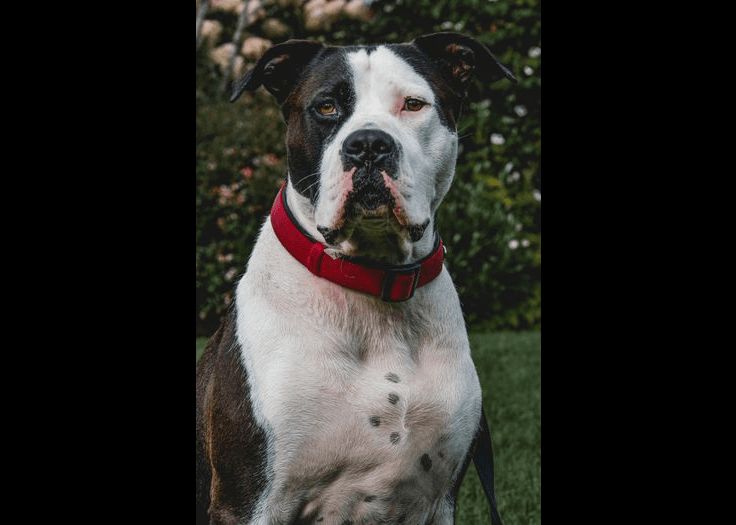
The American Bulldog is a large, muscular working dog descended from working farm dogs brought to the American South by early settlers. It is not the same dog as the English Bulldog. The American Bulldog is taller, more athletic, more energetic, and considerably more demanding to own than its English counterpart. Understanding this distinction before adopting is essential.
The American Bulldog is a loyal, protective, and physically capable companion in the right household. That household provides consistent exercise, clear training from the start, and careful management of dog-to-dog introductions.
This guide is informational and not veterinary advice. Consult a licensed veterinarian for medical concerns.
Bottom line: A well-matched American Bulldog is a devoted, athletic, and protective companion. This breed is not a low-energy lap dog; it requires structured daily exercise and experienced handling. The right household is committed to training, aware of dog-selectivity risk, and has verified housing policy before adopting.
Size & lifespan
Most adult American Bulldogs weigh 60–120 pounds and stand 20–28 inches at the shoulder. Males are substantially larger than females; size variation within the breed is significant across bloodlines.
The typical lifespan is 10–14 years, average for a large athletic breed.
History & origin
The American Bulldog descended from Old English Bulldogs brought to the American South in the 17th and 18th centuries, where they were used as working farm dogs for catching livestock and guarding property. The breed was nearly extinct after World War II and was revived primarily through the efforts of John D. Johnson and Alan Scott in the 1970s and 1980s.
The American Bulldog is not recognized by the AKC but is recognized by the UKC and several other registries. Two main types exist: the Johnson (Classic) type, which is heavier and more boxy, and the Scott (Performance) type, which is leaner and more athletic. Many dogs are a mix of both lines.
Lifestyle fit
- Apartment Living: Not ideal; size and exercise needs are significant, and BSL or lease restrictions may apply
- First-Time Owners: Challenging; independent streak and physical strength require experienced handling
- Families with Kids: Good fit in structured households; physical exuberance warrants supervision with young children
- Active Households: Strong fit for active owners committed to daily physical activity
- Low-Energy Homes: Poor fit
- Seniors: Not recommended; physical strength, exercise demands, and training requirements are a poor match for most senior households
Quick take: Is an American Bulldog right for you?
Pros
- Deeply loyal and protective family companion
- Athletic and versatile working dog
- Low grooming overhead
- Long lifespan relative to size
Cons
- Dog selectivity, particularly same-sex, requires management
- Physical strength and size make training investment non-negotiable
- Some housing policies restrict "bulldog-type" breeds
- Skin sensitivities and fold maintenance in some individuals
- Possible mild brachycephalic features warrant veterinary evaluation
- Independent streak makes training less forgiving than with more eager-to-please breeds
Best for
- Experienced households committed to structured training
- Active owners with a securely fenced yard
- Families who want a loyal, protective companion
- Owners who have verified housing policy
Not ideal for
- First-time owners
- Multi-dog households without careful management
- Apartments or restricted housing
- Owners expecting a low-maintenance companion
What living with an American Bulldog is actually like
American Bulldogs are physically imposing dogs with genuinely warm personalities toward their family. They form deep bonds and are characteristically loyal to their household. At home, a well-exercised American Bulldog is typically calm and settled.
The exercise and training requirement is real. An under-exercised American Bulldog with no training structure is a management challenge: 80–120 pounds of strong, independent dog acting on impulse. The time invested in training and exercise pays dividends in daily life.
Drool, skin-fold maintenance, and moderate shedding are part of the package. Neither is extreme, but both are present.
Temperament & personality
Loyal and family-bonded
American Bulldogs typically form strong bonds with their household and are consistently protective of family. Human-directed aggression is not a standard trait, but protective instincts do need to be channeled through training so the dog understands appropriate response from over-reaction.
Dog selectivity
Same-sex dog pairing is the most common area of tension. Many American Bulldogs coexist well with opposite-sex dogs; some have individual selectivity that requires permanent management. Early socialization improves outcomes but doesn't eliminate the underlying tendency. Assess the individual dog's history with other dogs before any multi-dog placement.
Independent streak
This breed was developed to work autonomously on a farm. That independence shows up in training: an American Bulldog may understand a command perfectly and still decide to evaluate whether compliance is necessary. Clear, consistent positive reinforcement works well; coercion and aversive methods produce pushback or avoidance.
Exercise needs
Most adult American Bulldogs benefit from 60–90 minutes of daily exercise, combining physical activity with mental engagement. They enjoy a range of activities: structured walks, fetch, jogging, and dog sports.
Note: Some individuals have mild brachycephalic features. Consult a veterinarian about exercise intensity and heat management, particularly in warm climates.
For other active breeds: High-Energy Dog Breeds
Shedding & grooming
Shedding
The American Bulldog sheds moderately year-round. The short coat does not require professional grooming, but sheds consistently enough that regular brushing and lint management are part of the routine.
Grooming routine
- Weekly brushing
- Routine bathing (monthly or as needed)
- Skin fold cleaning in individuals with pronounced facial folds to prevent moisture and bacterial buildup
- Nail trims, ear checks
Training & behavior
Positive reinforcement with consistent expectations works well. Start training early; the physical size of an adult American Bulldog makes it significantly harder to manage untrained behaviors.
Practical priorities:
- Leash manners from early on; physical strength creates a real pulling problem if neglected
- Controlled greetings with people and dogs
- Settle and impulse control
- Management framework for multi-dog interactions
Are American Bulldogs good with kids?
American Bulldogs can do well with children in structured households where basic obedience is in place. Their physical size and exuberance are the main management consideration with young children, not aggression. A 90-pound dog that jumps or plays roughly can knock a small child over without any harmful intent. Teaching a reliable "off" and "settle" before unsupervised interaction is practical, not optional.
Older children who understand how to interact with a large, energetic dog are typically a better fit. Supervision during initial introductions and when the dog is excited is recommended regardless of the child's age.
American Bulldogs with cats and small animals
The American Bulldog's working heritage includes farm and hog-bay roles that involved tracking and physically engaging large prey. Prey drive is high, and the breed's size and strength mean that predatory incidents, if they occur, are significantly more consequential than with smaller dogs.
Cat coexistence is possible in individual American Bulldogs with documented calm history around cats, but it is not a safe assumption for a dog without that history.
Key considerations:
- Size is the defining factor that separates this from smaller high-prey-drive breeds. An American Bulldog that gives chase in a household is a different management problem than a Dachshund doing the same. The stakes are higher, and the management bar is correspondingly higher.
- Farm and working-line dogs may have stronger prey expression. If the dog's background includes farm placement or working-dog lineage, that context matters when assessing cat-household fit. Ask about it directly.
- Structured introductions over time, with reliable physical barriers, are the minimum. A single supervised meeting is not sufficient evidence of safe coexistence. Weeks of barrier introductions, followed by supervised shared access, followed by honest ongoing assessment, is the appropriate sequence.
- Never leave unsupervised. Even American Bulldogs that have coexisted calmly with cats for extended periods should not be left alone with them unsupervised. Management is ongoing, not a milestone you complete.
For rabbits, guinea pigs, and birds: these are a higher-risk combination than cats and should not share open living space with an American Bulldog regardless of the individual dog's temperament.
If evaluating an American Bulldog from shelter or rescue: ask specifically whether the dog has documented cat history and in what context. Foster placement with observed, calm cat coexistence is the most reliable evidence.
For breeds generally suited to multi-pet homes, see Best Dogs With Cats.
Are American Bulldogs good for apartments?
Not ideal. Two barriers make apartment living difficult: exercise requirements and housing policy. American Bulldogs need 60–90 minutes of daily activity, which is hard to meet reliably without yard access. More practically, many landlords classify American Bulldogs alongside pit bull-type breeds and apply weight or breed-specific restrictions. Confirming housing policy in writing before adoption is essential.
In a home with yard access and a committed daily exercise routine, the American Bulldog can settle well indoors. Size and shedding are manageable once the exercise requirement is met.
Adoption, rescue, and foster considerations
American Bulldogs appear regularly at shelters and rescues, sometimes labeled "American Bulldog Mix," "Bully Mix," "Bull Mix," or simply "Large Mixed Breed." They are often confused with or grouped alongside pit bull-type breeds in shelter intake.
A common reason American Bulldogs enter rescue is owner under-estimation of their exercise needs or difficulty managing dog-to-dog tension. These are specific, manageable challenges, not general temperament problems.
If you are open to an American Bulldog mix, these dogs appear regularly at general shelters and rescue organizations across the country, particularly in southern and midwestern US regions and in transport rescues from those areas. The athletic build, dog selectivity tendency, and exercise needs described on this page apply to many of these dogs regardless of precise breed documentation. A dog coming out of foster care with documented behavioral history gives a clearer picture of dog-to-dog behavior and household manners than a shelter intake assessment can provide. The adoption readiness guide covers how to evaluate any dog for your specific household.
Ask the rescue or foster:
- Any dog-to-dog history: same-sex pairings, multi-dog household experience?
- Any known skin, airway, or hip concerns?
- How much exercise did the dog get daily?
- Any history of jumping on people, pulling on leash, or door-bolting?
- Has housing policy been confirmed for this breed type?
Common American Bulldog owner challenges
Dog selectivity management
Same-sex dog tension is the most common ongoing management challenge. Many American Bulldogs coexist well with one dog in the household but need structured introductions and supervision with unfamiliar dogs. A multi-dog household requires a clear management plan before bringing an American Bulldog home, not after.
Housing restrictions
Lease agreements and HOA policies frequently include pit bull or bulldog-type breed restrictions that apply to the American Bulldog. Confirming policy in writing before adoption prevents significant difficulty later. This applies equally to renters and homeowners in HOA-governed communities.
Under-stimulation
An American Bulldog that is not getting enough physical and mental activity will find its own outlets. Destructive chewing, restlessness, and door-bolting are common signs. The 60–90 minute daily exercise target is a realistic baseline, not a worst-case estimate.
Health considerations
Common health considerations
- Neuronal Ceroid Lipofuscinosis (NCL): A progressive neurological disease specific to American Bulldogs. DNA testing is available; ask for results from any source.
- Hip dysplasia: screening recommended, particularly for working or athletic lines
- Skin allergies and fold irritation: seasonal or environmental allergies common in short-coated bully breeds
- Brachycephalic features: some individuals have mild airway restriction; a veterinary evaluation before intense exercise programs is worthwhile
Consult a veterinarian for medical advice specific to your dog.
Questions to ask your shelter or vet
- Has this dog been DNA-tested or screened for NCL?
- Any history of skin, coat, or environmental allergies?
- Any signs of airway restriction or heat intolerance?
- Hip evaluation or any history of orthopedic concerns?
Cost to own an American Bulldog
Estimated monthly range: $140–$360 for most owners.
Row ranges show common category costs; the total reflects more realistic monthly ownership, including small recurring supplies and misc. expenses not listed separately.
Food costs are significant for a large, athletic breed. Skin sensitivities are common and can produce recurring vet visits. Some individuals have mild brachycephalic features that warrant veterinary monitoring. Insurance check advisable given potential breed restrictions. Insurance: verify coverage with your insurer before adoption; some policies restrict bulldog-type dogs.
For a full methodology and breakdown by size: How Much Does a Dog Cost Per Month?
Want a personalized estimate? Use the Monthly Cost Calculator to customize by breed, size, grooming profile, and health risk.
Similar breeds to research
If you are evaluating an American Bulldog, these breed profiles may also be worth exploring:
- Bulldog, shares ancestry but is a dramatically different dog in energy and care requirements
- Boxer, playful, athletic, family-oriented alternative with higher energy and shorter lifespan
- Rottweiler, similarly loyal and protective large breed with different working background
- American Pit Bull Terrier, overlapping "bully breed" category but different in origin and build
How does the American Bulldog compare?
Frequently Asked Questions
How big do American Bulldogs get?
How long do American Bulldogs live?
Are American Bulldogs good family dogs?
What is the difference between an American Bulldog and an English Bulldog?
Are American Bulldogs good for apartments?
Do American Bulldogs shed?
Are American Bulldogs easy to train?
Do American Bulldogs bark a lot?
Related Guides
Ready to meet a dog? Search adoptable American Bulldog dogs near you →