Siberian Husky: Temperament, Care & Lifespan
Learn about Siberian Husky temperament, extreme exercise demands, escape drive, and heavy shedding, and whether this high-energy working breed fits your household.
Updated
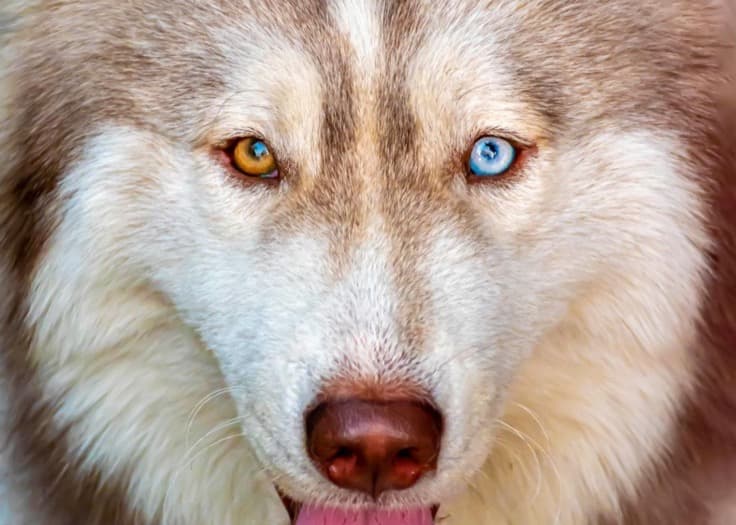
Stats at a Glance
- Size
- Large
- Energy
- Very High
- Shedding
- Very High
- Trainability
- Moderate
- Apartment
- Noi
- Very high exercise needs
- Grooming
- Moderatei
- Barking
- Moderate to High
- Exercise
- 90–150+ min
- With Kids
- Ofteni
- Supervision recommended
- With Dogs
- Often
- With Cats
- Challengingi
- Strong prey instinct
- Origin
- Russia
Trait Score Snapshot
| Trait | Score |
|---|---|
| Energy | ★★★★★5/5 |
| Shedding | ★★★★★5/5 |
| Barking | ★★★★☆4/5 |
| Grooming demand | ★★★☆☆3/5 |
| Trainability | ★★★☆☆3/5 |
| Apartment suitability | ★☆☆☆☆1/5 |
| Beginner friendliness | ★☆☆☆☆1/5 |
Siberian Huskies are energetic, athletic working dogs that historically pulled sleds across long distances. They are known for endurance, independence, and a striking appearance. Many people are drawn to their wolf-like look and expressive personality.
However, Huskies are not low-maintenance companions. They require substantial daily exercise, consistent boundaries, and secure environments. Without proper structure, they can become restless, destructive, or attempt to escape. Understanding their high stamina and independent nature is critical before bringing one home.
This guide is informational and not veterinary advice. Consult a licensed veterinarian for medical concerns.
Bottom line: A Siberian Husky is a strong fit for active owners who want an athletic, social companion and are ready for substantial daily exercise, secure fencing, and heavy year-round shedding. It is a weaker fit for apartment dwellers, sedentary households, or first-time owners who have not researched working breed management.
Size & lifespan
Most Siberian Huskies weigh 35–60 pounds and stand approximately 20–24 inches tall at the shoulder.
The average lifespan is typically 12–14 years, which is relatively long for a medium-to-large working breed.
History & origin
The Siberian Husky was developed by the Chukchi people of northeastern Siberia as a sled dog built for long-distance endurance in harsh Arctic conditions. Bred for efficiency over raw speed, Huskies were shaped by generations of working in cold climates with limited food resources and close human contact.
They were brought to Alaska in the early 1900s for sled racing and gained wider recognition during the 1925 serum run to Nome — a 674-mile relay that delivered diphtheria antitoxin through frozen terrain. The AKC recognized the breed in 1930.
Today most Siberian Huskies live as companions, but their working instincts — endurance drive, independence, vocal expression, and strong pack orientation — remain deeply embedded in the breed.
Lifestyle fit
- Apartment Living: Not recommended — energy needs, vocalizations, and escape drive make apartments very challenging
- First-Time Owners: Not recommended — independence and intensity require experienced management
- Families with Kids: Good fit in active households with supervision and structure
- Active Households: Excellent fit
- Low-Energy Homes: Poor fit — energy and management demands far exceed what calm households can provide
- Seniors: Not recommended — exercise demands and containment challenges are too intensive for most senior lifestyles
Quick take: Is a Siberian Husky right for you?
Pros
- Affectionate and social with family members
- Typically good with other dogs when properly introduced
- Athletic and well-suited for active, outdoor-focused lifestyles
- Generally non-aggressive temperament
Cons
- Very high daily exercise requirement — short walks are not sufficient
- Strong escape and prey drive requiring active containment management
- Heavy year-round shedding with intense seasonal coat blowouts
- Unreliable recall; not safe off-leash in unenclosed areas
Best for
- Highly active individuals
- Owners who enjoy running, hiking, or endurance-style activities
- Homes with secure fencing
- Experienced dog owners prepared for independence
Not ideal for
- Sedentary households
- Apartment living without structured outdoor access
- Owners seeking reliable off-leash control
- People unwilling to manage heavy shedding
What living with a Siberian Husky is actually like
Expect a dog that demands high-intensity daily exercise, tests containment consistently, and vocalizes freely. Huskies are typically social, non-aggressive, and engaged with their households. For an active owner with secured outdoor space, that combination is genuinely rewarding. For someone who underestimated the exercise volume, lives in an apartment, or has small animals, the same traits become serious management challenges within weeks of bringing the dog home.
Temperament & personality
Siberian Huskies are often described as energetic, independent, and social.
Independent and free-thinking
Unlike highly obedience-focused breeds such as the German Shepherd, Huskies often prioritize exploration over compliance. They may understand commands but choose when to respond.
Social and pack-oriented
Many Huskies enjoy the company of other dogs and may thrive in multi-dog households when properly introduced.
Vocal rather than bark-focused
Huskies are known more for howling and expressive vocalizations than frequent barking.
Exercise needs: How much activity does a Siberian Husky need?
Most adult Huskies require 90–120+ minutes of daily physical and mental activity.
A balanced routine may include:
- Long walks or runs
- Structured pulling or endurance-style activities
- Hiking
- Agility or advanced obedience training
- Scent or problem-solving enrichment
Endurance vs. short bursts
Huskies historically developed sustained stamina. Short walks are rarely sufficient for long-term stability.
Signs of insufficient exercise
- Digging
- Escaping attempts
- Chewing
- Excessive vocalizing
Consistent, high-level activity is essential.
For other active breeds: High-Energy Dog Breeds
Shedding & grooming
Siberian Huskies have a thick double coat designed for cold climates.
Do Huskies shed a lot?
Yes. Huskies shed heavily year-round and experience seasonal “coat blowing,” when shedding increases significantly.
Grooming routine
- Brushing several times per week
- Daily brushing during seasonal shedding
- Occasional bathing
- Routine nail and ear care
Shedding volume can be substantial, especially during coat transitions.
Compared to heavy shedders like the Golden Retriever, Huskies often produce even more seasonal shedding.
Training & behavior
Training Huskies requires patience and realistic expectations.
Training difficulty
Generally moderate. They are intelligent but often independent.
Common behavior challenges
- Escaping fenced areas
- Poor recall reliability
- Digging
- High prey drive toward small animals
Practical management strategies
- Install secure, tall fencing.
- Avoid off-leash environments unless fully secure.
- Provide structured daily endurance exercise.
- Rotate enrichment activities to prevent boredom.
Strong management is often as important as training.
Are Siberian Huskies good family dogs?
Many Huskies are affectionate and playful with their families. Their social nature can make them engaging companions in active households.
However:
- Supervision with young children is important.
- High energy can overwhelm calmer households.
- Prey drive may be an issue with small pets.
For more family-friendly options: Best Dogs for Families
Are Huskies good for apartments?
Huskies are generally not considered ideal for apartment living due to their high energy, endurance needs, and vocal tendencies.
Apartment living may only work if:
- Exercise is extensive and consistent
- Mental stimulation is structured
- Noise tolerance is acceptable
Without adequate outlets, confined spaces often amplify behavioral issues.
For more apartment-suited breeds: Best Dogs for Apartments
Adoption, rescue, and foster considerations
A common reason Siberian Huskies enter rescue is owner mismatch around exercise demands and escape drive. People underestimate daily activity requirements and the degree of containment management involved. When those needs go unmet, behavioral issues — destructive behavior, vocalization, escape attempts — tend to follow quickly.
Adult adoption can be a strong choice for this breed. Foster caregivers can provide specific insight into energy levels, leash behavior, compatibility with other dogs or small animals, and vocalization patterns — information that simply isn’t available with a puppy.
Ask the rescue or foster:
- What does the dog’s daily exercise routine look like, and how does behavior change when under-exercised?
- Has the dog had any escape attempts or fencing challenges?
- How does the dog behave when left alone — vocalization, destructive behavior?
- Any known history with small animals or cats?
- Any coat, skin, or dietary sensitivities to be aware of?
Common Siberian Husky owner challenges
Escape drive and containment
Huskies are skilled escape artists. Standard fencing is frequently insufficient — they will dig under, jump over, or exploit gaps. Underground electric fences typically do not work for this breed. Tall, reinforced fencing with a dig barrier is a practical necessity before bringing a Husky home, not something to address after an escape incident.
Recall unreliability
Once a Husky’s attention shifts to something interesting, recall commands often go unheeded. Off-leash time in unfenced areas carries real risk. Most experienced owners manage this with consistent on-leash exercise and access to enclosed spaces rather than trying to build reliable recall in open areas.
Vocalization
Howling and expressive vocalizations are a natural outlet for this breed. In shared-wall housing or noise-sensitive environments, this becomes a daily management challenge. Training can reduce unwanted howling but rarely eliminates it entirely.
Health considerations
Common health considerations
- Hip dysplasia
- Eye conditions (cataracts, progressive retinal atrophy)
- Zinc-responsive dermatosis (in some lines)
Weight & lifestyle risks
Siberian Huskies are naturally lean when adequately exercised. Rapid or unexpected weight gain may indicate insufficient activity or a dietary issue. Coat quality and skin condition can be early indicators of nutritional status or underlying zinc-related issues.
Questions to ask your shelter or vet
- Any eye exam history (cataracts or PRA screening)?
- Any hip evaluation history?
- Any coat, skin, or dietary sensitivity history?
- What was the previous activity level and exercise routine?
Consult a veterinarian for medical advice specific to your dog.
Cost to own a Siberian Husky
Two cost categories tend to run distinctly higher for Huskies than for average dogs:
Containment and fencing is a meaningful upfront investment. Standard fencing is frequently insufficient, and retrofitting after an escape attempt costs more than doing it correctly from the start. Tall, reinforced fencing with a dig barrier is a practical necessity.
Shedding management requires ongoing investment in quality grooming tools — deshedding brushes, appropriate vacuum equipment, and lint rollers. The at-home maintenance is constant year-round, with a significant increase during seasonal coat blowouts.
Other typical expenses include food, routine veterinary care, leashes and harnesses for strong pullers, and enrichment equipment. Owners who pursue structured dog sports (canicross, skijoring, bikejoring) add training and gear costs. Pet insurance is worth considering given the breed’s eye and joint health risks.
For budgeting guidance: How Much Does a Dog Cost Per Month?
Similar breeds to research
If you’re considering a Siberian Husky, these breed profiles may also be worth exploring:
Siberian Husky comparison pages
Other comparisons