Bulldog vs Cavalier King Charles Spaniel: Lifespan, Training & Health
Bulldog vs Cavalier King Charles Spaniel: compare lifespan, health risks, trainability, alone tolerance, and costs for these two low-energy companion breeds.
Updated

Quick Verdict
Better fit for families with kids
Both family-friendly
Bulldog: Supervision with toddlersCavalier King Charles Spaniel: Gentle and attentiveiGentle and attentive; higher energy floor and eagerness to engage tend to suit active families and younger children well
Cavalier King Charles Spaniel
Bulldog: Beginner-friendlyCavalier King Charles Spaniel: Very beginner-friendly
Better alone-time tolerance
Bulldog
Bulldog: HighCavalier King Charles Spaniel: Low
Lower barking tendency
Bulldog
Bulldog: LowCavalier King Charles Spaniel: Low to Moderate
Bulldog
Bulldog: Low to ModerateiShort coat; main ongoing task is regular cleaning of facial skin foldsCavalier King Charles Spaniel: ModerateiBrushing 2–3x per week; ear feathering and leg furnishings need regular attention to prevent matting
Verdicts are based on trait ratings. Always evaluate individual dogs and confirm behavior with the shelter, foster, or rescue organization.
Stats at a Glance
| Trait | Bulldog | Cavalier King Charles Spaniel |
|---|---|---|
| Size | Medium | Small |
| Energy | Low | Low to Moderate |
| Shedding | Moderate | Moderate |
| Grooming | Low to Moderate | Moderate |
| Trainability | Moderate | High |
| Barking | Low | Low to Moderate |
| Apartment Friendly | Yes | Yes |
| Good With Kids | YesSupervision with toddlers | YesGentle and attentive |
| Good With Dogs | Often | Often |
| Good With Cats | OftenLow prey drive; calm | OftenGentle; usually a good fit |
| Daily Exercise | 20–40 min/day | 30–60 min/day |
| Typical Lifespan | 8–10 years | 12–15 years |
| Beginner Friendly | Beginner-friendly | Very beginner-friendly |
The Bulldog and Cavalier King Charles Spaniel look quite different on the surface, but both are low-energy, apartment-compatible companion breeds that suit quieter households with moderate daily routines. What separates them is more consequential than it first appears: a meaningful lifespan gap, opposite alone-time tolerances (the Bulldog handles it far better, which surprises most people), a clear trainability difference, and two very distinct health risk profiles. For owners choosing between the two, those four dimensions tend to drive the real decision.
Main difference: The Bulldog is calmer alone and quieter, suits owners with regular out-of-home schedules, but lives shorter and carries brachycephalic health risks. The Cavalier is more trainable and longer-lived, but needs consistent human company and proactive cardiac monitoring as it ages.
Who should choose each breed?
Choose a Bulldog if
- You are away from home regularly and need a dog that settles well on its own for several hours
- A very low daily exercise requirement (20–40 minutes of slow walking) fits your routine
- A calm, unhurried, physically stable companion suits your household better than a more energetic or needy dog
- You can budget for breed-specific health care, understand brachycephalic management, and have reliable air conditioning at home
Choose a Cavalier King Charles Spaniel if
- You are home most of the day and want a closely attached, responsive companion
- A more trainable breed that responds readily to reward-based methods suits your preference
- A longer typical lifespan and smaller physical footprint matter to your long-term planning
- You can commit to proactive cardiac monitoring from around age two and understand the breed's heart health picture before adopting
Size and build
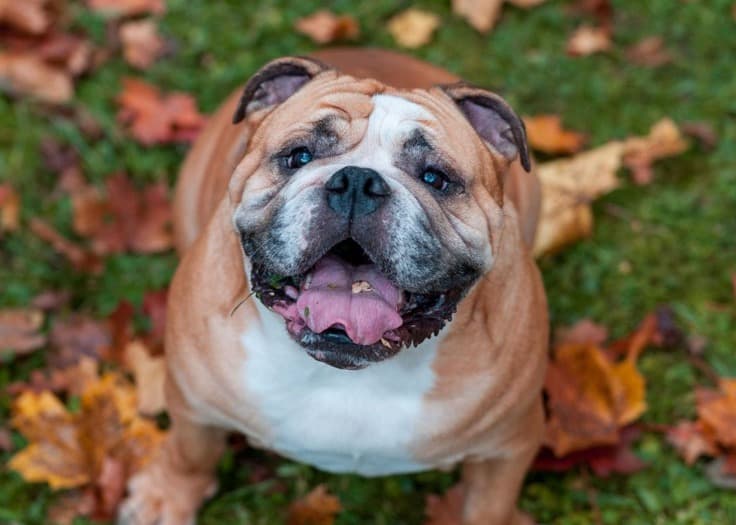
The size gap between these two breeds is more significant than the breed category labels suggest. Bulldogs are solidly built medium dogs, typically weighing 40–50 pounds and standing 14–15 inches at the shoulder. They are dense, muscular, and low to the ground. Cavaliers are small, 12–18 pounds and 12–13 inches at the shoulder, and considerably easier to lift, carry, and manage physically.
For day-to-day ownership, the weight difference matters in several ways: carrying a Bulldog upstairs or into a car is not always straightforward; the Bulldog's food consumption, medication doses, and vet fees scale accordingly. In shared spaces, elevator lobbies, dog-friendly patios, crowded parks, the size difference also affects how other people and dogs react. Neither breed is large or difficult to manage outdoors, but prospective Bulldog owners coming from small-breed experience should register that the physical handling difference is real.
Temperament and personality
Both breeds share a calm, companion-first orientation that sets them apart from working or sporting dogs. Neither is demanding of activity, neither tends toward reactivity, and both have a settled indoor presence that suits households without a lot of outdoor ambition.
The Bulldog's temperament is notably stable. It is not a deeply bonded, shadow-style companion in the way that many small breeds are, it tends toward relaxed coexistence rather than close attachment. This emotional resilience is part of what gives it a High alone-time tolerance. Bulldogs are good-humored, patient, and hard to provoke. They are affectionate without being clingy. An owner who wants a dog that is present and friendly without being velcro will often find the Bulldog a very easy temperament to live with.
The Cavalier is more engaged and actively attached. It follows its owner through the house, seeks out contact, and invests real emotional energy into the people around it. This closeness is a significant part of the breed's appeal and makes it feel exceptionally companionable during the hours a person is home. The same quality is what makes alone time genuinely difficult for many Cavaliers. Owners who are home most of the day find the Cavalier deeply rewarding; owners who are away regularly will often find they have created an anxious dog.
Neither breed is a high-stimulation or demanding personality. Both tend to adapt well to routine and calm household rhythms.
Exercise and stimulation needs
The Bulldog's exercise needs are the lowest of any breed in this comparison set. Twenty to forty minutes of slow, low-intensity walking per day is adequate for most Bulldogs, and even that should be monitored in warm weather. Bulldogs are heat-sensitive and can become distressed in moderate temperatures that would not affect most breeds. Morning and evening walks in warm climates, always with access to cool water and shade, are the standard management approach.
The Cavalier needs 30–60 minutes of daily exercise, still modest by any standard. It can comfortably join brisk walks, short hikes, and active outdoor time, and generally enjoys varied activity more than the Bulldog does. It is not demanding of intensity, but it benefits from some regularity and variety in its outdoor time.
Mental stimulation is less of a differentiator here than in higher-intelligence breeds. Neither the Bulldog nor the Cavalier has strong working drive. Both settle easily without puzzle feeders or training sessions filling their day. For owners who want a low-stimulation, low-maintenance daily routine, this is one of the shared advantages of the pairing.
Shedding and grooming
Grooming demands are relatively modest for both breeds, though for different reasons.
The Bulldog has a short, smooth coat that requires very little active maintenance. A quick brush once or twice a week and the occasional bath is sufficient for the coat itself. The key grooming task specific to Bulldogs is cleaning the facial skin folds, tail fold, and any other body folds, these trap moisture and can develop infections if not kept dry and clean. Fold care supplies (gentle wipes and drying powder) are a small recurring cost and a daily or every-other-day routine item. This is not onerous, but it is non-negotiable and specific to the breed.
The Cavalier's silky medium-length coat requires brushing 2–3 times per week, with extra attention to the ear feathering, chest, and leg furnishings, where tangles form most easily. Professional grooming is helpful periodically but is not required on a schedule the way it is for curly or continuously growing coats. Monthly grooming costs for the Cavalier run $10–$25.
Both breeds shed moderately and year-round. Neither is a low-shedding option, owners of both will find loose fur on furniture, clothing, and floors. If minimal shedding is a priority, see our Low Grooming Dogs and Low Shedding Dogs guides for breeds that offer that profile.
Training and behavior
The Cavalier is the more trainable breed. Rated High, it is attentive and genuinely interested in working with its handler. Reward-based training clicks quickly, the Cavalier offers behaviors readily, retains cues well, and enjoys short sessions. For first-time owners working through basic manners and building a well-behaved household dog, the Cavalier is among the more forgiving small breeds.
The Bulldog is rated Moderate. It can absolutely be trained, Bulldogs learn house rules, basic cues, and acceptable behavior with consistency and patience. However, the training process typically requires more persistence and higher-value motivators than with the Cavalier. Bulldogs operate at their own pace and are not especially eager to please in the active, responsive way that high-trainability breeds demonstrate. Food motivation tends to be the most reliable lever. Owners who approach training with realistic expectations and a patient, reward-based method get solid results; owners who expect quick uptake or sharp responsiveness are often frustrated.
Barking is well-matched: the Bulldog is rated Low and the Cavalier Low-Moderate. Both are among the quieter companion breeds, with no tendency toward reactive alarm barking. This is a shared advantage for apartment and shared-wall living.
Apartment and family fit
Which is better for apartments?
Both are rated Yes for apartment suitability. The Bulldog's very low exercise needs and minimal barking make it one of the most practical apartment breeds physically. The Cavalier's Low-Moderate barking and moderate exercise needs are also apartment-compatible. The practical differentiator is alone tolerance: the Bulldog's High rating means it can manage several hours without its owner present; the Cavalier's Low rating means it struggles, and an apartment where it is regularly alone for six-plus hours is likely to produce an anxious or vocal dog over time.
One non-negotiable for Bulldog apartment owners: reliable air conditioning. Bulldogs cannot regulate heat effectively. An apartment without consistent climate control is a genuine welfare concern for this breed in spring and summer months.
See our Best Dogs for Apartments guide for a broader look at how these breeds compare across the full apartment-suitability spectrum.
Which is better for families with children?
Both are rated Yes for compatibility with children. The Bulldog's strength as a family dog is its patience and physical stability: low energy, steady temperament, and a physique that takes rough contact without being rattled. It is rarely provoked by unpredictable toddler behavior and is not easily overwhelmed. For very young children still learning to handle dogs, this combination of calm and sturdiness is a meaningful practical advantage.
The Cavalier is gentle, attentive, and well-suited to active engagement with children, but its smaller size means it is more physically vulnerable to rough handling, and its closer emotional attachment means it can become stressed in chaotic environments more readily than the Bulldog. For older children who interact calmly and consistently, both breeds are equally good companions.
See our Best Dogs for Families guide for broader guidance across family configurations.
Which is easier for first-time owners?
The Cavalier earns a 5/5 beginner-friendly rating versus the Bulldog's 4/5, primarily on the strength of its trainability and responsive temperament. For owners who want clear progress in early training, the Cavalier is more rewarding to work with.
The Bulldog is not a difficult first dog, but it asks for a different kind of patience: less response in training, more tolerance for its own pace, and a non-negotiable understanding of brachycephalic management. The Bulldog's high alone tolerance is actually an advantage for first-time owners whose daily schedules are not yet built around dog ownership. The breed's lower exercise needs also reduce the pressure of year-one logistics.
For both breeds, health literacy before adopting matters more than for most dogs. See the health section below.
Health comparison
Both breeds carry significant health risks, but the profiles are entirely different in character and timing.
The Bulldog's dominant health concern is its brachycephalic anatomy. The compressed facial structure that defines the breed's appearance also compresses the airway. Many Bulldogs live comfortably with managed breathing, but a meaningful proportion of the population requires veterinary intervention at some point, including potential surgical correction of obstructive airway anatomy (Brachycephalic Obstructive Airway Syndrome). Secondary concerns include joint and orthopedic issues, skin fold infections, and eye conditions. The breed's lifespan of 8–10 years reflects the cumulative health burden of its structural features. Heat intolerance is not a minor inconvenience for this breed; it is a serious welfare consideration that constrains where and when the dog can be outdoors.
The Cavalier carries a strong predisposition to Mitral Valve Disease, a progressive condition affecting the mitral heart valve that is extremely prevalent in the breed. Breed health protocols recommend baseline cardiac screening from around age two, with regular monitoring thereafter. MVD tends to progress gradually, and many Cavaliers live comfortably into their mid-teens with appropriate monitoring and, when necessary, medication. The condition's trajectory is not predictable at the individual level, which makes proactive monitoring a genuine ongoing commitment, not a one-time check.
Neither breed is low-risk. Prospective adopters for both should research the specific health picture thoroughly before committing. Pet insurance is worth budgeting for both, particularly strongly recommended for the Bulldog given its higher probability of needing significant veterinary intervention.
Cost comparison
These are planning ranges, not fixed costs. Regional variation, insurance, adoption source, and individual health history all affect actuals significantly.
| Cost area | Bulldog | Cavalier King Charles Spaniel |
|---|---|---|
| Food (monthly) | $35–$60 | $30–$50 |
| Grooming upkeep (monthly avg) | $0–$15 | $10–$25 |
| Routine vet care (monthly avg) | $55–$115 | $45–$90 |
| Training / socialisation (est. first year) | $100–$300 | $100–$300 |
| Estimated ongoing monthly range | $130–$340 | $110–$290 |
The Bulldog runs higher monthly costs, primarily driven by elevated veterinary risk. Its higher food costs also reflect its larger body size. Grooming costs are comparable and low for both breeds. Cavalier vet costs can increase materially in later life if cardiac monitoring, medication, or specialist care becomes necessary. Pet insurance is strongly recommended for both breeds, but especially the Bulldog.
For broader budgeting guidance, see How Much Does a Dog Cost Per Month? or use the Monthly Cost Calculator for a breakdown by size and grooming profile.
Final decision: Bulldog or Cavalier King Charles Spaniel?
The decision between these two usually comes down to two questions: how much time do you spend away from home, and how much does lifespan matter to your planning?
If you have regular out-of-home commitments and want a dog that settles predictably on its own, the Bulldog's High alone tolerance gives it a clear practical edge. Its low exercise demands and quiet temperament reinforce that advantage. The serious caveats are health and lifespan: a Bulldog owner who understands brachycephalic management, budgets realistically for veterinary care, and has climate-controlled living makes a sound choice. An owner who has not fully registered the health burden may find the ongoing management more intensive than expected.
If you are home most of the day and want a more trainable, longer-lived companion, the Cavalier is the more rewarding choice on those dimensions. Its responsive temperament makes training genuinely enjoyable; its typical 12–15 year lifespan means a longer shared relationship. The critical caveat is cardiac health: the Mitral Valve Disease risk is real and requires proactive engagement from around year two of ownership.
If you are evaluating dogs at a shelter or rescue rather than choosing a specific breed, the traits described here apply to any dog showing this profile, calm indoor presence, low exercise needs, companion-focused temperament. These characteristics show up across many mixed-breed dogs regardless of breed documentation. Meeting a dog in person at a shelter, rescue organization, or foster home remains the most reliable way to assess individual fit. The Adoption Readiness Guide can help you prepare for that process.