Doberman Pinscher vs Rottweiler: Energy, Shedding, Trainability & Lifespan
Compare Doberman Pinscher vs Rottweiler on temperament, trainability, shedding, exercise needs, family fit, and monthly ownership costs to see which breed better matches your home and routine.
Updated
Quick Verdict
Better fit for families with kids
Doberman Pinscher
Doberman Pinscher: Training and supervision requirediEarly training and socialization recommended given size and protective natureRottweiler: Experienced handling needediCan be loyal and gentle in structured households with early socialisation; size and strength require experienced management and supervision around young children
Longer lifespan
Doberman Pinscher
Doberman Pinscher: ~11.5 yrsRottweiler: ~9 yrs
Doberman Pinscher
Doberman Pinscher: Early intro recommendediCan coexist with cats when introduced properly, especially from puppyhood; working instincts and size mean adult introductions require more structure and timeRottweiler: Early intro essentialiCan coexist with cats when raised with them from puppyhood; adult introductions are more variable — dominant or strong-prey-drive individuals require careful, slow pairing under supervision
Verdicts are based on trait ratings. Always evaluate individual dogs and confirm behavior with the shelter, foster, or rescue organization.
Stats at a Glance
| Trait | Doberman Pinscher | Rottweiler |
|---|---|---|
| Size | Large | Large |
| Energy | High | Moderate |
| Shedding | Low to Moderate | Moderate |
| Grooming | Low | Low to Moderate |
| Trainability | Very High | High |
| Barking | Moderate | Low to Moderate |
| Apartment Friendly | Challenging | Possible (daily exercise required) |
| Good With Kids | Older kids recommendedTraining and supervision required | DependsExperienced handling needed |
| Good With Dogs | DependsEarly socialization key | DependsEarly socialization needed |
| Good With Cats | Possible with socializationEarly intro recommended | DependsEarly intro essential |
| Daily Exercise | 60–90 min/day | 60–90 min/day |
| Typical Lifespan | 10–13 years | 8–10 years |
| Beginner Friendly | Not recommended | Some challenges |
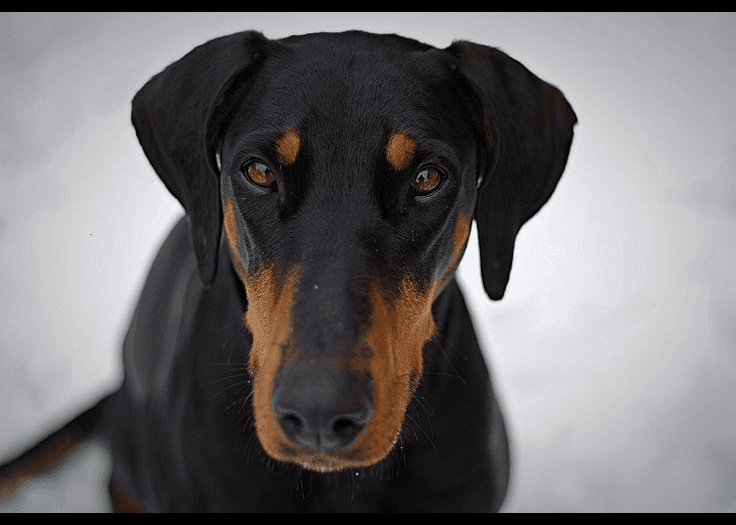
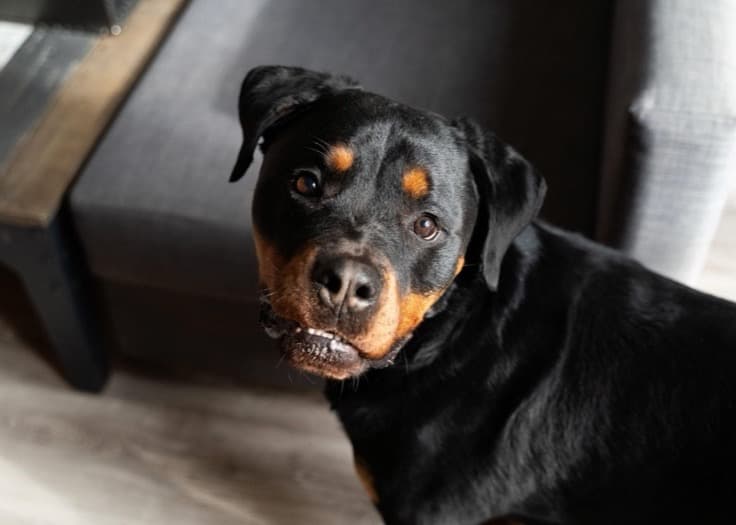
Doberman Pinschers and Rottweilers are two of the world's most respected protection breeds, and both trace their working roots to Germany. They share a great deal in common: large, powerful, intelligent, deeply loyal, and bred for work that demands both physical capability and strong human partnership. Where they diverge is in energy intensity, build, shedding load, lifespan, and how they express their drive. Dobermans are leaner, faster, and higher-energy, with exceptional trainability and a close-shadowing temperament. Rottweilers are heavier and more physically imposing, with a quieter indoor presence and a more independent streak. For most households considering either breed, the real decision comes down to energy management, lifestyle pacing, and how much structure you can consistently provide.
Who should choose each breed?
Choose a Doberman Pinscher if
- You want a highly responsive, fast-learning working dog with elite obedience potential
- You can meet high daily exercise and mental stimulation demands
- You prefer a lower-shedding coat with minimal grooming upkeep
Choose a Rottweiler if
- You want a physically imposing, naturally watchful companion with a steadier indoor temperament
- You prefer a dog that is slightly more tolerant of moderate activity levels
- You have experience confidently handling large, powerful, protective breeds
Size and build
Doberman Pinschers typically weigh 60–100 pounds and stand 24–28 inches at the shoulder — lean, athletic, and built for speed and agility. Rottweilers are considerably heavier at 80–135 pounds and stand 22–27 inches tall, with a broad, blocky frame built for raw power rather than speed.
The practical difference is significant. Rottweilers are among the heaviest working breeds; even a moderately large Rottweiler requires respect and confident handling given their strength. Dobermans are large but more agile and easier to redirect physically — which helps in training but also means their energy level is harder to contain when they are not occupied. Both breeds require leads and collars fitted properly; off-lead control starts with robust obedience work, not wishful thinking.
Temperament and personality
Both breeds are intensely loyal, alert, and protective — but the character they present day-to-day is quite different. Dobermans are often described as "velcro dogs": they shadow their owners closely, are highly engaged with their environment, and tend to be more expressive and emotionally demonstrative. This attentiveness makes them excellent working partners but also means they handle isolation and under-stimulation poorly.
Rottweilers present as more self-contained. They are affectionate within the family but more reserved and measured in their responses, particularly with strangers. A well-socialised Rottweiler is steady and confident; a poorly socialised one can tip toward territorial or reactive behaviour that is difficult to manage given their bulk. Both breeds require early and consistent socialisation — neglecting this will create problems that are far harder to address in adulthood.
Neither breed suits a household that cannot offer structure, engagement, and experienced leadership.
Exercise and stimulation needs
Dobermans are rated High (4/5) for energy and typically need 60–90 minutes of daily activity — with a meaningful portion going toward mental stimulation rather than just physical output. Training drills, scent work, structured runs, and sport participation all help. Under-stimulated Dobermans can develop anxiety, destructive habits, and hard-to-manage behaviour rapidly.
Rottweilers are rated Moderate (3/5) and also benefit from 60–90 minutes of daily exercise, but they tend to be more tolerant of a day-to-day pace that isn't relentlessly high-drive. That said, a sedentary life is not appropriate for either breed. A Rottweiler that is under-exercised and under-trained will become difficult to manage — and at 100+ pounds, that is a serious management problem.
If your lifestyle is highly active or sport-oriented, a Doberman is the stronger fit. If your routine is consistent but moderate, a Rottweiler may adapt more comfortably.
Shedding and grooming
Both breeds are easy to maintain in terms of coat — but the Doberman has a slight edge. Dobermans have a short, flat single coat rated Low-Moderate (2/5) for shedding. Routine wiping and occasional brushing is typically sufficient. Rottweilers have a slightly denser short double coat rated Moderate (3/5), which sheds more notably and can increase seasonally.
For either breed, grooming appointments are infrequent and home care is minimal. This is a practical advantage of both over heavier-coated working breeds. The Doberman's coat is marginally lower-maintenance and produces less in-home hair, which may be a tiebreaker for some households — but neither breed will overwhelm you with grooming demands.
Training and behaviour
Dobermans are rated Very High (5/5) for trainability and are among the most capable dogs at structured obedience, protection sport, and service work. They are fast learners, highly responsive to clear communication, and motivated to engage closely with their owners. This trainability is an asset — but it also means a Doberman with no structure will apply that intelligence to finding its own entertainment, which rarely works in the owner's favour.
Rottweilers are rated High (4/5) — capable and motivated, but with more natural stubbornness. They test boundaries when they detect inconsistency and respond poorly to hesitant or reactive handling. The most effective approach for both is positive reinforcement paired with clear expectations and early, consistent boundaries.
On barking: Dobermans are rated Moderate (3/5) and will alert to environmental changes. Rottweilers are rated Low-Moderate (2/5) and tend to be quieter overall. In close-quarters living, this may be a relevant factor.
Apartment and family fit
Which is better for apartments?
Dobermans are rated 2/5 for apartment suitability; Rottweilers 3/5. Neither is a natural fit for small spaces, but the Rottweiler's lower energy level and less intense daily stimulation requirement give it a marginal edge. A Doberman's high energy makes apartment living particularly demanding — without sufficient structured daily exercise, restlessness and reactivity increase quickly. The Rottweiler can adapt with consistent exercise, though size alone is a floor-space concern for both. Homes with outdoor access are better suited to either breed.
Which is better for families with kids?
Both breeds are rated 3/5 for kid-friendliness. They can be excellent with children in structured households with early socialisation and consistent training. Dobermans tend to be more adaptable and responsive in chaotic, unpredictable family settings. Rottweilers are deeply loyal but more imposing physically — their size and strength around small children calls for experienced handling and active supervision. As with all large, working breeds, individual temperament matters and supervision around young children is non-negotiable. See Best Dogs for Families for broader guidance.
Which is easier for first-time owners?
Neither. Dobermans are rated 1/5 for beginner-friendliness — among the lowest of any breed. Their intelligence, drive, and close bonding to their owner make them a demanding partner for anyone who hasn't established clear leadership and training habits before. Rottweilers are rated 2/5 — slightly more forgiving, but their physical strength and protective instincts still require confident, experienced management. Both breeds benefit substantially from professional obedience classes starting in puppyhood.
Cost comparison
| Cost area | Doberman Pinscher | Rottweiler |
|---|---|---|
| Food (monthly) | $55–$90 | $70–$120 |
| Grooming upkeep (monthly avg) | $10–$20 | $10–$25 |
| Routine vet care (monthly avg) | $50–$90 | $50–$90 |
| Training / socialisation (est. first year) | $200–$600 | $200–$600 |
| Estimated ongoing monthly budget | $115–$200 | $130–$235 |
Costs vary widely by region, insurance, adoption source, dog age, and individual health history. For both breeds, training and early socialisation are among the most important first-year investments — and should be treated as non-negotiables rather than optional extras. Dobermans carry a meaningful cardiac health concern (dilated cardiomyopathy, DCM), which can involve Holter monitoring and echocardiograms as screening — an ongoing cost not reflected in routine vet estimates above. Rottweilers are prone to hip and elbow dysplasia, joint issues, and heart conditions, with a shorter average lifespan (8–10 years vs 10–12 years for Dobermans). Both breeds are best insured early.
For broader budgeting guidance, see How Much Does a Dog Cost Per Month?
Final decision: Doberman Pinscher or Rottweiler?
Choose a Doberman Pinscher if you want a faster, more responsive, higher-drive working companion with elite trainability, a lower-shedding coat, and a close-bonded temperament — and you can consistently meet their energy and mental stimulation demands. Choose a Rottweiler if you want a physically imposing, steady guardian with a quieter indoor presence and more tolerance for a moderate activity pace — and you have the experience to confidently manage a powerful, protective breed. Both require structured training, early socialisation, and experienced ownership. Neither should be chosen casually. As always, individual personality matters more than breed statistics — meeting dogs in person — through shelters, rescue organizations, and foster networks — before committing is always the right approach.