German Shepherd vs Rottweiler: Temperament, Trainability, Shedding & Family Fit
Compare German Shepherd vs Rottweiler on temperament, trainability, shedding, exercise needs, family fit, and monthly ownership costs to see which breed better matches your home and routine.
Updated
Quick Verdict
Better fit for families with kids
German Shepherd
German Shepherd: With training & socialisationiCan be good with children with early training and socialisation; size and protective instincts mean supervision around young children is importantRottweiler: Experienced handling needediCan be loyal and gentle in structured households with early socialisation; size and strength require experienced management and supervision around young children
Both present some challenges for beginners
German Shepherd: Some challengesRottweiler: Some challenges
Longer lifespan
German Shepherd
German Shepherd: ~11 yrsRottweiler: ~9 yrs
German Shepherd
German Shepherd: Intro and training needediCan do well with cats when raised together or introduced early; working instincts and size mean rushed introductions can set back the relationship significantly — slow, structured pairing works bestRottweiler: Early intro essentialiCan coexist with cats when raised with them from puppyhood; adult introductions are more variable — dominant or strong-prey-drive individuals require careful, slow pairing under supervision
Verdicts are based on trait ratings. Always evaluate individual dogs and confirm behavior with the shelter, foster, or rescue organization.
Stats at a Glance
| Trait | German Shepherd | Rottweiler |
|---|---|---|
| Size | Large | Large |
| Energy | High | Moderate |
| Shedding | Very High | Moderate |
| Grooming | Moderate | Low to Moderate |
| Trainability | Very High | High |
| Barking | Moderate | Low to Moderate |
| Apartment Friendly | Challenging | Possible (daily exercise required) |
| Good With Kids | OftenWith training & socialisation | DependsExperienced handling needed |
| Good With Dogs | DependsEarly socialization key | DependsEarly socialization needed |
| Good With Cats | Possible with socializationIntro and training needed | DependsEarly intro essential |
| Daily Exercise | 60–120 min/day | 60–90 min/day |
| Typical Lifespan | 9–13 years | 8–10 years |
| Beginner Friendly | Some challenges | Some challenges |
German Shepherds and Rottweilers are two of the most recognisable working breeds in the world, and they share more than most people expect: both are large, intelligent, deeply loyal, and built for demanding work. Both require experienced ownership, structured training, and serious daily exercise. Where they diverge is in energy intensity, shedding volume, physical build, and how they engage with daily life. German Shepherds tend to be more active, more vocal, and considerably more demanding on grooming. Rottweilers tend to be heavier-built, quieter indoors, and generally easier to maintain in terms of coat. The choice generally comes down to whether you want the higher-drive, more versatile German Shepherd or the more physically imposing Rottweiler with the lower-maintenance coat.
Who should choose each breed?
Choose a German Shepherd if
- You want a highly versatile working dog capable of obedience, sport, protection, or service roles
- You can commit to high daily exercise and strong mental stimulation
- You do not mind a heavy grooming and shedding load year-round
Choose a Rottweiler if
- You want a powerful, steady companion with a lower-key indoor presence
- You prefer a low-maintenance coat with minimal grooming
- You have experience handling strong, protective breeds and value steady confidence over high drive
Size and build
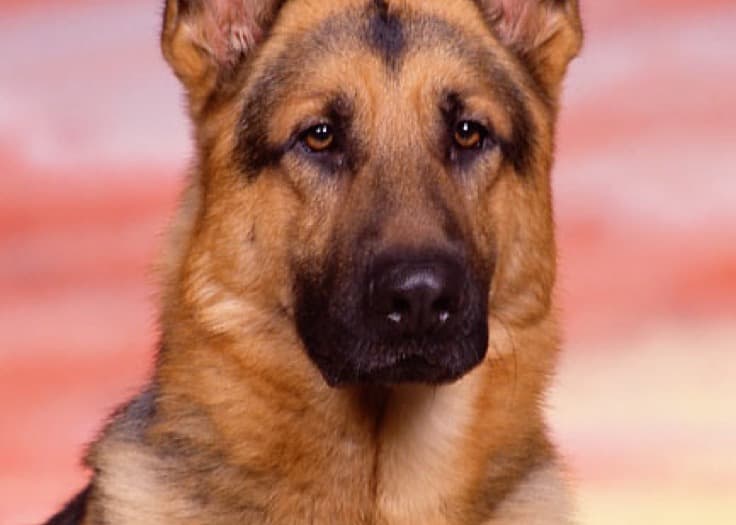
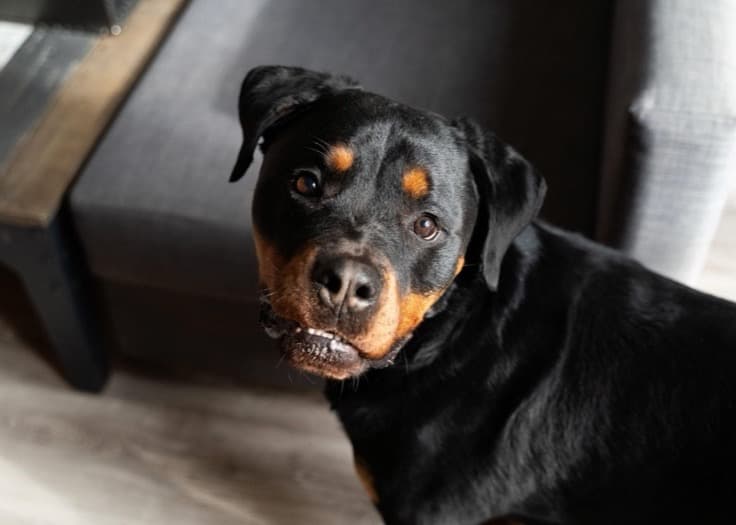
German Shepherds and Rottweilers are both large breeds, but they differ significantly in build. German Shepherds typically weigh 50–90 pounds and stand 22–26 inches tall — athletic, agile, and built for speed and endurance. Rottweilers are considerably heavier at 80–135 pounds, standing 22–27 inches tall, with a blocky, muscular frame built for power rather than speed.
This size difference has practical implications. A Rottweiler is harder to physically manage without consistent obedience training, and their raw strength demands confident handling from the start. A German Shepherd is more agile and responsive, which makes them easier to redirect during training but also means their energy can be more difficult to contain when they are not occupied.
Temperament and personality
Both breeds are loyal, protective, and deeply bonded to their families — but they express that loyalty differently. German Shepherds are alert, expressive, and highly responsive to their environment. They tend to follow their owners from room to room, vocalise more readily, and engage actively with everything happening around them. This attentiveness makes them excellent working dogs but also means they are not well-suited to long periods of isolation.
Rottweilers often present as calmer and quieter indoors, while German Shepherds are usually more alert and environmentally responsive. Rottweilers are affectionate within the family but typically more reserved with strangers, and they tend to need less constant engagement to stay settled. That said, Rottweilers require equally rigorous early socialisation — without it, their natural wariness can tip into problematic territorial behaviour.
Neither breed is appropriate for households that cannot provide clear structure, consistent leadership, and early positive socialisation.
Exercise and daily routine
German Shepherds are rated High for energy (4/5) and typically need 60–120 minutes of daily activity — and crucially, a significant portion of that needs to be mentally stimulating, not just physical. Puzzle work, scent games, off-lead runs, and structured training all help. Under-stimulated German Shepherds are prone to anxiety, excessive barking, and destructive behaviour.
Rottweilers are rated Moderate (3/5) and typically need 60–90 minutes of daily exercise. They are less frantically energetic than German Shepherds but still need structured physical activity and consistent mental engagement. A Rottweiler that is under-exercised or under-trained can become stubborn and difficult to manage given their strength.
If your lifestyle is highly active, both breeds can thrive. If your routine is more moderate, a Rottweiler is the more manageable option.
Shedding and grooming
This is one of the sharpest practical differences between the two breeds. German Shepherds shed very heavily year-round (5/5) from a dense double coat with feathering — expect fur on everything, brushing several times a week, and seasonal blow-out periods where shedding intensifies dramatically. Regular grooming appointments help but do not eliminate the daily management load.
Rottweilers shed moderately (3/5) from a short, flat coat that needs very little maintenance — an occasional brush and wipe-down is normally sufficient. If you are sensitive to dog hair in the home or want to minimise grooming time and cost, the Rottweiler is considerably more practical.
Training and behaviour
German Shepherds are rated Very High (5/5) for trainability and are among the most responsive dogs to structured obedience and working sport. They are highly motivated, quick to learn, and able to master complex command sequences. This also means they are sensitive to inconsistent or weak handling — a German Shepherd that is not trained properly will invent its own rules.
Rottweilers are rated High (4/5) — capable and motivated learners, but they require more confident, consistent leadership. They can be stubborn when they sense hesitation in their owner, and they do not respond well to harsh or punitive methods. The most effective approach for both breeds is positive reinforcement with clear, firm boundaries established from puppyhood.
On barking: German Shepherds are rated Moderate-High (4/5) and will alert frequently. Rottweilers are rated Low-Moderate and tend to be quieter — this can be a meaningful factor if you live near neighbours.
Apartment and family fit
Which is better for apartments?
Both breeds are rated 2/5 for apartment suitability and are generally better suited to homes with outdoor space. A German Shepherd in a small apartment without sufficient daily exercise is a recipe for frustration for both dog and owner. A Rottweiler can adapt marginally better due to lower energy intensity, but their size alone makes apartment living challenging. Neither is a natural apartment dog.
Which is better for families with kids?
German Shepherds are rated 4/5 for kid-friendliness, Rottweilers 3/5. Both require early socialisation and supervision around young children — this is especially important given their size and the strength of both breeds. German Shepherds tend to be more adaptable in busy, unpredictable family environments. Rottweilers are deeply loyal but their physical build calls for more caution and more experienced management around small children. Individual temperament varies considerably — meeting a dog before adopting is always worthwhile.
Which is easier for first-time owners?
Neither. Both breeds are rated 2/5 for beginner-friendliness. German Shepherds demand sustained mental engagement and consistent training — they are not content to coast. Rottweilers require confident management of a powerful, territorial dog. First-time owners seriously considering either breed should invest in professional obedience training from day one.
Cost comparison
| Cost area | German Shepherd | Rottweiler |
|---|---|---|
| Food (monthly) | $60–$100 | $70–$120 |
| Grooming upkeep (monthly avg) | $30–$70 | $10–$25 |
| Routine vet care (monthly avg) | $40–$80 | $50–$90 |
| Training / socialisation (est. first year) | $200–$600 | $200–$600 |
| Estimated ongoing monthly budget | $130–$250 | $130–$235 |
Costs vary widely by region, insurance, adoption source, dog age, and individual health history. For both breeds, training classes and early socialisation are often a more meaningful ownership cost than grooming alone — and should be factored in from day one. German Shepherds carry higher at-home grooming time and deshedding supply costs; Rottweilers may carry higher long-term vet costs due to breed-related health concerns including hip dysplasia and heart conditions; they also have a shorter average lifespan. The first-year investment for either breed tends to be meaningfully higher than routine ongoing costs.
Final decision: German Shepherd or Rottweiler?
Choose a German Shepherd if you want a more versatile, responsive, and energetic working companion and are willing to manage heavy shedding and a demanding grooming routine. Choose a Rottweiler if you want a powerful, steady companion with a lower coat maintenance burden and a quieter indoor presence. Both breeds require experienced ownership, consistent training, and serious daily exercise — neither should be chosen casually. As always, individual personality matters more than breed statistics. Meeting dogs in person — from shelters, rescue organizations, and foster care — before committing is always the best approach.